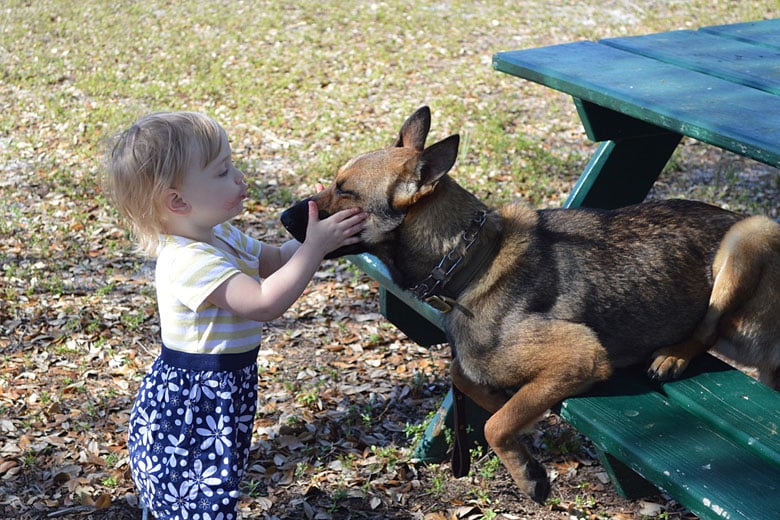
A trained protection dog for a family has a different job than a police dog, a sport dog, a barking pet, or a dog that simply looks intimidating.
The dog has to live inside a real household.
That means children, guests, pets, doors opening, people moving, noise, travel, visitors, and normal life. The dog cannot treat every movement as a threat. It cannot make the home feel tense, unstable, or dangerous.
But the dog also has to be capable.
If someone breaks into the home, attacks the handler, threatens the family near a vehicle, or creates a real security problem, the dog must be more than friendly. It must be able to respond under pressure.
That is the standard most buyers are actually looking for, even if they do not know how to say it yet.
They do not just want a dog that bites.
They want a dog that is safe enough to live with their family and serious enough to protect them if the threat is real.
If you are trying to decide whether a trained protection dog is right for your family, start with the free Protection Dog Decision Guide before you make a costly mistake.
If you already know your family needs a trained Fortress K9 Protection Dog, then scheduling a consultation is the right decision.
The Problem With Most Protection Dog Searches
Most people searching for trained protection dogs for families start in the wrong place.
They look at breed.
They look at price.
They look at bite videos.
They look at dogs currently available.
They look for the dog that appears strongest, hardest, or most impressive.
Those things may matter, but they are not the starting point.
The starting point should be the family.
Who lives in the home?
Are there children?
Are there other dogs or cats?
Do guests visit often?
Does the dog need to travel?
Will the dog be handled by one person or multiple family members?
Is the main concern home invasion, personal security, rural property, travel, or general family safety?
What level of protection does the family actually need?
A trained protection dog should be matched to the family’s real life, not chosen because it looked good in one video.
That is where many buyers get into trouble. They buy the image of protection before they understand the responsibility of living with a serious dog.
Safe Is Not Enough. Capable Is Not Enough.
A family protection dog has to meet two standards at the same time.
First, the dog must be safe in the home.
Second, the dog must be capable when it matters.
If the dog is safe but cannot respond under pressure, it may be a good pet, but it is not a finished family protection dog.
If the dog is capable but cannot live safely around children, guests, and normal household life, it is not a family protection dog either.
A true family protection dog must solve both problems.
This is where Fortress K9 draws a hard line. The dog must be stable enough for family life and serious enough for real threats. One side without the other creates risk.
A dog that is only safe may create false confidence.
A dog that is only powerful may create liability.
The right dog has to be both.
Safety Around Children Comes First
If a dog is not safe around your children, it is not a protection dog.
That line matters because families sometimes assume protection work and household safety are separate issues. They are not. For a family, household safety is part of the protection standard.
Children are not adults. They move quickly, make noise, drop things, run through rooms, play with friends, and create unpredictable movement. A dog that cannot handle normal family life does not belong in a home with children just because it can bite hard.
That does not mean children should be allowed to do anything they want with a protection dog. They need rules. Parents need structure. The family needs to understand how to manage the dog correctly.
But the dog itself must have the temperament, clarity, and training to live safely in the home.
This is why buying the wrong dog is not a minor mistake. It can change the feeling of the entire house. Instead of confidence, the family gets management problems. Instead of peace of mind, they get stress. Instead of protection, they get a new risk inside the home.
The Dog Must Be Stable Around Normal Life
A trained protection dog for a family should not be suspicious of everything.
The dog should not treat every guest like a threat. It should not become unstable every time a delivery driver comes to the door. It should not lose control because children are running, pets are moving, or visitors are present.
A family protection dog has to understand the difference between normal life and a real threat.
That does not happen by accident. It comes from selection, development, exposure, training, and proper handling. The dog must be stable enough to move through ordinary life without constant conflict.
A family dog may need to handle:
Children in the home.
Guests and visitors.
Other pets.
Vehicles.
Public environments.
Normal household noise.
Doors opening and closing.
People moving quickly.
Travel and hotel environments.
A dog that cannot settle, think, and stay controlled in normal life is not ready for a family just because it has protection training.
Obedience Has to Hold Under Pressure
Basic obedience is not enough.
Many dogs can sit, down, heel, or stay when nothing serious is happening. That is useful, but it does not prove the dog is ready for family protection.
A trained protection dog must be obedient when the situation is stressful. The dog must listen when there is movement, noise, pressure, aggression, or confusion. It must stay connected to the handler before, during, and after activation.
This matters because control is what makes power useful.
A family does not need a dog that only responds when the environment is calm. A family needs a dog that can still be managed when something is wrong.
The dog must be able to move with the handler, hold position when needed, come off a threat when told, ignore safe people, and return to control when the situation is over.
A dog that cannot be controlled under pressure is not a trained protection dog for a family.
It is a liability with training on it.
The Dog Must Have The Switch
A trained protection dog for a family needs what Fortress K9 calls The Switch.
That means the dog can be calm and stable in normal life, capable of controlled aggression when a true threat requires it, and then able to turn off and return to stability when the threat is over.
This is one of the main differences between a real family protection dog and a dangerous dog.
A dangerous dog may be aggressive without clarity. It may react to the wrong things. It may stay elevated after the moment has passed. It may make the home feel unsafe.
A trained family protection dog should be different.
The dog should be able to relax in the home, move through family life, remain stable around children, and still respond if someone threatens the family. Afterward, the dog must return to control.
A dog that can only turn on is not finished.
A family protection dog must also turn off.
Capability Still Matters
Some people hear “safe with children” and assume the dog must be soft.
That is wrong.
A family protection dog must be safe in the home, but it cannot be weak when the threat is real. The dog must have the nerve, confidence, training, and commitment to respond under pressure.
Real protection is not just barking.
It is not just looking intimidating.
It is not just performing bite work in a controlled setting.
Real protection may involve pressure that is loud, fast, and uncomfortable. It may happen inside a home, beside a vehicle, near the handler, or around family movement.
That does not mean the dog should be reckless. It means the dog must be prepared for the job.
The same dog that is calm in the living room may need to respond if someone attacks the handler or forces entry into the home. That balance is difficult. Not every dog can do it.
This is why trained protection dogs for families must be selected carefully.
Real-World Protection Is Different From a Demonstration
A demonstration can be useful. It can show obedience, confidence, grip, and control. But a demonstration is still a controlled picture.
A real threat is not controlled.
A real threat may happen in a hallway, near a vehicle, at night, at the front door, around furniture, or while children are moving. The attacker may not stand still. He may fight back. He may have another person with him. He may use a weapon. He may attack suddenly.
A family protection dog must be prepared for those realities in a serious, structured way.
This does not mean training should be theatrical or reckless. It means the dog must learn how to function when the situation does not look like a clean routine.
That is the difference between a dog that performs and a dog that protects.
Why Retargeting Matters for Families
Retargeting is a technical word, but the concept is simple.
Retargeting means the dog can change focus when the threat changes.
For example, if the dog is engaged with one attacker and a second attacker becomes the bigger threat, the dog may need to shift. If the attacker starts using a weapon hand, the dog may need to respond to where the danger is coming from. If the handler is suddenly in danger, the dog may need to return to the handler instead of staying locked onto the first person.
This matters because real threats do not follow one clean script.
A dog trained only to bite one target and stay there may do exactly what it was trained to do. But if the threat changes, that may no longer be the right answer.
A trained family protection dog must understand the larger mission.
Protect the handler.
Protect the family.
Stay connected.
Return to control.
That kind of training is serious, but it must always be tied back to family safety. The goal is not to create a wild dog. The goal is to create a dog that can think through pressure and still live safely in the home.
Weapons, Multiple Attackers, and Surprise Pressure
Some protection topics sound harsh because real threats are harsh.
A family may face a person with a weapon. A threat may involve more than one attacker. An attack may happen suddenly. A problem may begin at a vehicle, in a driveway, at a front door, or inside the home.
A serious protection dog should be prepared for those possibilities if the dog is being sold as more than a deterrent.
That does not mean every family needs the highest level of dog. It does not mean every dog should be trained for every scenario. It means the buyer should understand what level of capability they are actually buying.
A dog trained for serious real-world work must be able to stay functional when the picture changes. It must understand that the mission is not simply to bite and stay locked onto one person forever. The mission is to protect the family.
But the family standard remains the same.
The dog must come back to control. The dog must be safe around children. The dog must be stable in the home. The dog must not treat normal life like a threat.
Capability without family stability is not the Fortress K9 standard.
Home and Vehicle Scenarios Matter
Families do not live on training fields.
They live in homes. They travel in vehicles. They walk through driveways, parking lots, front doors, garages, and public environments.
That means a trained protection dog for a family should be prepared for the places where a family actually needs protection.
A home invasion scenario is different from a field demonstration. A vehicle attack scenario is different from a clean bite setup. A surprise attack is different from a predictable training picture.
These scenarios matter because they reveal whether the dog understands the job or only understands the routine.
A dog that can only perform in one clean environment may not be ready for a real family. A family dog must be able to function in real spaces and then return to normal life afterward.
That last part is critical.
The dog that can protect near a vehicle must also ride calmly in a vehicle.
The dog that can protect inside a home must also live safely inside that home.
The dog that can respond to a surprise threat must not become reactive toward every surprise movement.
That is why selection and training matter.
Family Integration Training Is Not Optional
A trained protection dog is not complete just because the trainer can handle it.
The family has to learn the dog too.
That is why Family Integration Training matters.
The family needs to understand how to handle the dog, how to give commands, how to manage children, how to introduce structure, how to handle guests, how to travel with the dog, what to practice, and what not to do.
A serious protection dog should not be dropped off and left for the family to figure out.
The transition matters.
The dog may already know the work, but the family must know how to live with the dog.
At Fortress K9, the goal is not just to train the dog. The goal is to integrate the dog into the family’s actual life.
That is what makes the dog useful after go-home.
Breed Is Only the Starting Point
Certain breeds are more commonly used for protection work, especially working-line German Shepherds, Belgian Malinois, and Dutch Shepherds.
Those breeds can be excellent when selected and developed correctly.
But breed alone does not make a dog safe, capable, or appropriate for a family.
A German Shepherd from the wrong lines may not have the stability or capability needed.
A Belgian Malinois may have too much intensity for many homes if not selected and developed properly.
A Dutch Shepherd may be powerful and athletic but still wrong for a family if the temperament, training, or match is wrong.
Do not buy the breed label.
Buy the finished standard.
The dog must be safe, stable, obedient, controllable, and capable. The dog must also fit your family.
What Serious Families Should Ask
Before buying a trained protection dog for your family, ask better questions.
Is this dog safe around children?
Can this dog live in a normal home?
Can this dog be managed around guests?
Can this dog be controlled around other animals?
Can this dog settle when nothing is wrong?
Can this dog respond when the threat is real?
Can this dog be called off?
Can this dog turn off after activation?
Has this dog been exposed to real-world pressure?
Has this dog been trained around home, vehicle, surprise, or multiple-attacker scenarios?
What does the dog do if the threat changes?
What training does my family receive?
What support is available after go-home?
How is the dog matched to my family?
Those questions matter more than a highlight video.
When a Trained Protection Dog Makes Sense for a Family
A trained protection dog may be the right decision when your family wants more than passive security. Cameras, alarms, locks, and lights can all be useful, but they do not physically move with your family or respond when a threat is already inside the timeline.
A family protection dog may make sense when you want active protection, a visible deterrent, more warning, and a dog that can live with your family while still being capable if someone threatens them.
It may also make sense if you travel, live on rural property, have family members home alone, or want a higher level of personal security without turning your home into a prison.
A protection dog is not right for everyone.
It requires the right dog, the right family, the right training, the right handling, and the right support.
But for the right family, a trained protection dog can add something passive security cannot provide: a living, thinking layer of protection inside the family environment.
The Fortress K9 Standard
Fortress K9 trains Family Protection Dogs around one standard:
Safe in the home.
Capable when it matters.
That means the dog must be stable enough for children, guests, pets, and normal household life. It also means the dog must be capable under real pressure when someone threatens the family.
A true family protection dog cannot be only safe.
It cannot be only powerful.
It has to be both.
If you are trying to decide whether a trained protection dog fits your family, start with the free Protection Dog Decision Guide.
If you are ready to talk about a trained Fortress K9 Protection Dog, then scheduling a consultation is the right decision.
If you want to understand the different levels of training and investment, review Training Levels & Pricing.
If you want to understand why real protection is different from sport training or bite work, read Beyond the Bite.
FAQ
What are trained protection dogs for families?
Trained protection dogs for families are dogs selected, trained, and matched to live safely with a family while still being capable of responding if a real threat appears. They should be stable in the home, safe around children, obedient under pressure, and controllable after activation.
Are trained protection dogs safe with children?
A properly selected, trained, matched, and integrated family protection dog can be safe with children. But not every trained protection dog belongs in a home with children. If a dog is not safe around your children, it is not a protection dog.
What makes a protection dog safe for a family?
A family protection dog should have stable temperament, clear obedience, proper social exposure, control around guests, the ability to settle in the home, and the ability to distinguish normal life from a real threat.
Can a family protection dog also be capable?
Yes. That is the point. A true family protection dog should be safe in the home and capable when it matters. Safety without capability creates false confidence. Capability without safety creates risk.
What is The Switch in a protection dog?
The Switch is the ability to remain calm and stable in normal life, respond with controlled aggression when a true threat requires it, and then turn off and return to control when the threat is over.
Is a sport dog the same as a family protection dog?
No. Sport dogs may be impressive and well trained, but sport work and family protection are different missions. A family protection dog must be prepared for real-world family environments, not only structured routines.
What should I ask before buying a trained protection dog for my family?
Ask whether the dog is safe with children, stable in the home, controllable around guests, obedient under pressure, trained for real-world scenarios, matched to your family, and supported after go-home.