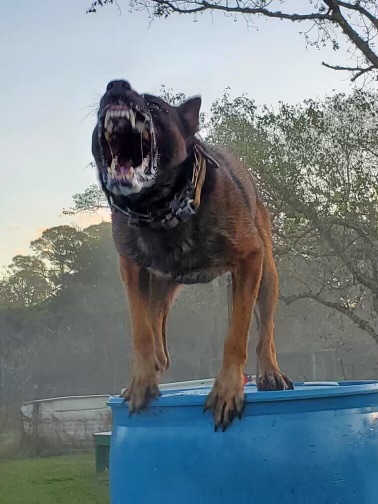
A lot of people searching for trained protection dogs make the same mistake.
They watch a dog bite a sleeve, hit hard, bark aggressively, or look impressive in a video, and they assume that dog is ready to protect a family.
That is not always true.
A dog that bites is not automatically a protection dog. A dog that looks powerful in training may still be unsafe around children, unreliable around guests, unstable around pets, or unprepared for a real threat.
If you are looking for a dog to help protect your family, the standard has to be higher.
A true protection dog must be safe in your home and capable when it matters.
Schedule a Consultation to learn whether a Fortress K9 trained protection dog is the right fit for your family. If you are still deciding, start with the free Protection Dog Decision Guide.
The Problem With Judging a Protection Dog by the Bite
Bite work is easy to see.
Control is harder to see.
That is one reason buyers get misled.
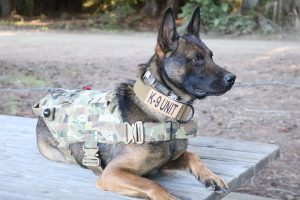
A dog may look serious because it hits the sleeve hard. It may look impressive because it barks at the decoy. It may look intense because it pulls into the harness or comes out of the vehicle with power.
But the bite is only one part of the standard.
The real question is not just:
“Will this dog bite?”
The better questions are:
“Will this dog understand when to bite?”
“Will this dog stay clear-headed under pressure?”
“Will this dog stop when commanded?”
“Can this dog live safely in my home?”
“Can this dog be around my children, guests, and normal family life?”
Those questions matter because your family does not live on a training field.
Your dog will live in your house. Around your children. Around visitors. Around delivery drivers, contractors, friends, neighbors, other pets, and public environments.
If the dog cannot handle that, the dog is not protection.
It is risk.
Real Protection Is Not the Same as Sport Performance
There is nothing wrong with sport dog training when it is understood for what it is.
Sport has rules. Sport has equipment. Sport has patterns. Sport has predictable pictures for the dog.
Real protection does not.
A real threat may happen in a hallway, parking lot, driveway, hotel, vehicle, rural property, or inside the home. The attacker may not stand still. He may fight back. He may use a weapon. He may keep moving. He may use the environment. He may not look like the training picture the dog has seen before.
That is why a real-world protection dog must be trained for more than a clean bite on obvious equipment.
Real protection requires stability, clarity, control, environmental confidence, obedience under pressure, and the ability to work through conflict.
A dog that only performs in a predictable sport picture may fail when the picture changes.
That matters when your family is depending on the dog.
If you want to understand how Fortress K9 separates real protection from sport-based training, read Beyond the Bite or review the Training Levels & Pricing page.
A Family Protection Dog Must Be Safe First
A protection dog for families must be safe before it is powerful.
That does not mean weak.
That does not mean passive.
That does not mean the dog cannot engage a real threat.
It means the dog must be stable enough to live inside the family environment without creating new danger.
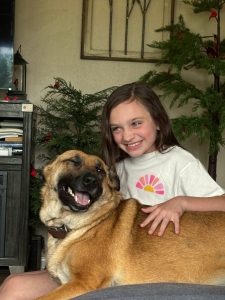
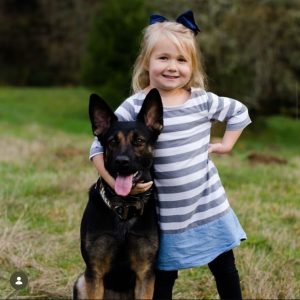
A real family protection dog should be safe with kids. Safe around guests. Safe around normal movement in the home. Safe with the realities of family life.
Children run. They yell. They trip. They drop food. They hug dogs wrong. They move unpredictably. They have friends over. They leave doors open. They create chaos.
That is real life.
If a dog cannot handle that environment, the dog does not belong in a family home.
This is why Fortress K9 uses a simple standard:
If a dog is not safe around your children, it is not a protection dog.
The same standard applies to guests and pets.
If your dog cannot distinguish between a real threat and a normal visitor, you do not have confidence. You have a liability.
If your dog is dangerous around cats, small dogs, or other household animals without a clear management plan, that matters.
If your dog is powerful but unstable, your family may be less safe after buying the dog than before.
That is one of the biggest protection dog buying mistakes serious buyers need to avoid.
Capability Still Matters
Safety alone is not enough.
A dog can be calm in the house and still fail under pressure.
A dog can be wonderful with your children and still be unable to stop a determined threat.
That is why Fortress K9 does not define a protection dog as merely a family companion with a bark.
A true home protection dog must be capable.
Capability means the dog can respond when a real threat appears.
It means the dog does not fall apart when the situation becomes stressful, loud, fast, or confusing.
It means the dog can move toward danger while your family moves away from it.
It means the dog can disrupt the attacker, buy time, and help change the outcome of the encounter.
But that capability must remain under control.
A dog that cannot be controlled after engagement is not finished.
A dog that cannot out, recall, or return to obedience creates risk after the threat has changed.
Real protection requires both sides.
Safe in the home.
Capable in the fight.
The Switch: Calm Until It Matters
At Fortress K9, one of the clearest ways to understand the standard is The Switch.
The dog must be calm and stable in normal life.
Then, when a real threat requires it, the dog must be able to turn on controlled aggression.
Then, when the threat is over, the dog must turn off and return to stability.
That is what most people actually want.
They do not want a dangerous dog.
They do not want a dog that is suspicious of everyone.
They do not want a dog that makes guests, children, or public life impossible.
They want a dog that can sleep beside their children and still respond if someone forces his way into the home.
That is the difference between a dog that bites and a true protection dog.
If you want to see whether this kind of dog fits your family, start with the free Protection Dog Decision Guide.
A Trained Protection Dog Must Fit the Family
The right dog for one family may be the wrong dog for another.
This is where many buyers get into trouble.
They start with the dog’s appearance, breed, drive, size, or bite power.
Those things matter. But they are not enough.
A trained protection dog must be matched to the family.
That means looking at:
- Children in the home
- Guests and extended family
- Other dogs, cats, and pets
- Travel requirements
- Public exposure
- Handler experience
- Physical ability
- Home environment
- Security concerns
- Desired protection level
- Timeline and budget
- Family comfort with structure and handling
A personal protection dog for one adult handler is not always the same as a family guard dog for a household with children.
An executive protection dog for travel, public movement, and higher-level exposure may require a different level of environmental stability and handler training than a dog primarily intended for home security.
A rural family may have different needs than a city family.
A family with small children may need a different dog than a single adult with prior working-dog experience.
This is why Fortress K9 does not treat trained protection dogs as simple inventory.
The dog must fit the family.
The family must be prepared for the dog.
And the training must support the actual environment the dog will live in.
Schedule a Consultation if you want help determining what level of trained protection dog fits your family, home, and security concerns.
Obedience Is Not Optional
A protection dog without obedience is dangerous.
Obedience is what makes power usable.
It is what allows the dog to live in the home, move through public environments, respond to the handler, ignore distractions, and return to control after a threat.
For a family, obedience is not decoration.
It is the foundation.
A dog must understand household structure. It must respect boundaries. It must respond when told to come, stay, place, heel, release, or stop.
The stronger the dog, the more important obedience becomes.
A weak dog with poor obedience is frustrating.
A powerful dog with poor obedience is a problem.
When you are evaluating trained protection dogs, do not only ask what the dog can do to a threat.
Ask what the dog does when nothing is happening.
That is where the truth shows up.
Can the dog settle?
Can the dog wait?
Can the dog walk calmly?
Can the dog ignore normal movement?
Can the dog be around children without becoming overstimulated?
Can the dog be controlled around guests?
Can the dog turn off?
The answer matters.
What Buyers Should Look For in Trained Protection Dogs
If you are searching for trained protection dogs, do not judge the dog by one video.
Look for the complete standard.
A serious protection dog should show:
- Stable temperament
- Clear obedience
- Control around normal people
- Safety around the family
- Environmental confidence
- Ability to work under pressure
- Proper targeting and engagement
- Reliable release and recall
- Real-world scenario exposure
- Clear matching to the buyer’s lifestyle
- Family integration support after purchase
The seller should be willing to explain the dog honestly.
Not every dog should be sold to every buyer.
Not every family needs the same level of dog.
Not every buyer is ready for a high-level dog.
That is not a weakness. That is responsible placement.
A protection dog is a serious security decision. If you are still trying to determine whether this is the right step, use the free Protection Dog Decision Guide before you make a costly mistake.
Why the Wrong Protection Dog Can Make Your Home Less Safe
The wrong dog can create false confidence.
That may be the most dangerous part.
A family may believe they are protected because they bought a dog that looks serious.
But when a real threat happens, the dog may not respond correctly.
Or the opposite may happen.
The dog may respond too quickly, at the wrong time, toward the wrong person.
Both are failures.
A dog that cannot engage under pressure does not give your family real protection.
A dog that cannot live safely in your home does not give your family peace.
A dog that cannot be controlled does not give your family confidence.
That is why price should never be the only filter when buying a protection dog.
The real question is not:
“How cheap can I get one?”
The real question is:
“What is the cost of being wrong?”
With a protection dog, the cost of being wrong can be severe.
The wrong dog can create risk around your children, guests, pets, neighbors, or the public.
The wrong dog can fail when your family needs him most.
The wrong dog can give you the illusion of security without the reality of it.
That is why Fortress K9 stays focused on the full standard.
Safe in the home.
Capable in the fight.
The Fortress K9 Standard
Fortress K9 trains premium family protection dogs for serious buyers who want more than a dog that looks impressive.
The goal is not to create chaos.
The goal is controlled capability.
A Fortress K9 dog should be able to live in the home, move with the family, remain stable around normal life, and respond when the threat is real.
That requires selection, training, pressure testing, obedience, matching, and family integration.
It also requires honesty.
Some dogs should not be family protection dogs.
Some dogs may be better suited for other work.
Some buyers need a different level than they originally thought.
Some families need education before they are ready.
That is why the consultation matters.
A good consultation does not simply ask, “Which dog do you want?”
It should clarify your family, your home, your lifestyle, your security concerns, your experience level, your timeline, and your budget.
Then the right recommendation can be made.
If your family is ready to discuss a trained protection dog, schedule a Fortress K9 consultation.
Final Thought: Do Not Buy the Bite. Buy the Standard.
A dog that bites may impress people.
A true protection dog protects people.
There is a difference.
The right trained protection dog should make your family safer without making your home more dangerous.
It should be stable with your children.
Clear around guests.
Controlled around normal life.
Capable under real pressure.
And able to return to obedience when the threat is over.
That is the standard.
That is what separates a dog that bites from a dog that protects.
Ready to Learn More?
If you already know your family needs real protection, schedule a consultation with Fortress K9.
If you are still deciding whether a protection dog is right for your family, start with the free Protection Dog Decision Guide.
If you want to understand the difference between training levels, review Training Levels & Pricing.
FAQ
Are trained protection dogs safe with kids?
They can be, but not every trained protection dog is appropriate for a home with children. A family protection dog must be selected and trained for stability, control, obedience, and household safety. At Fortress K9, the standard is clear: if a dog is not safe around your children, it is not a protection dog.
What is the difference between a protection dog and a guard dog?
A guard dog is usually thought of as a dog that protects property. A family protection dog must do more than guard property. It must live safely with the family, respond to the handler, remain controlled around normal life, and engage only when a real threat requires it.
Is a dog that bites enough for protection?
No. Bite work alone does not make a dog a true protection dog. A real protection dog must be safe in the home, clear under stress, obedient under distraction, capable against real pressure, and controllable after engagement.
What makes trained protection dogs different from regular trained dogs?
A regular trained dog may have obedience, manners, or household skills. A trained protection dog must also have the ability to detect, deter, and respond to real threats under control. The protection side must be built on top of stability and obedience, not instead of it.
Are protection dogs safe with guests?
A properly selected and trained family protection dog should be controllable around guests. The dog must understand the difference between normal visitors and a real threat. Guest safety depends on selection, training, handler structure, and family integration.
Can a protection dog live with pets?
Some protection dogs can live with other pets, but it depends on the dog, the other animals, the home, and the management plan. This should be discussed during the consultation so the right dog is matched to the right household.
How do I know if a protection dog is right for my family?
Start by looking at your actual security concerns, family structure, experience level, home environment, and ability to maintain structure. The free Fortress K9 Protection Dog Decision Guide is designed to help you make that decision before you spend serious money.