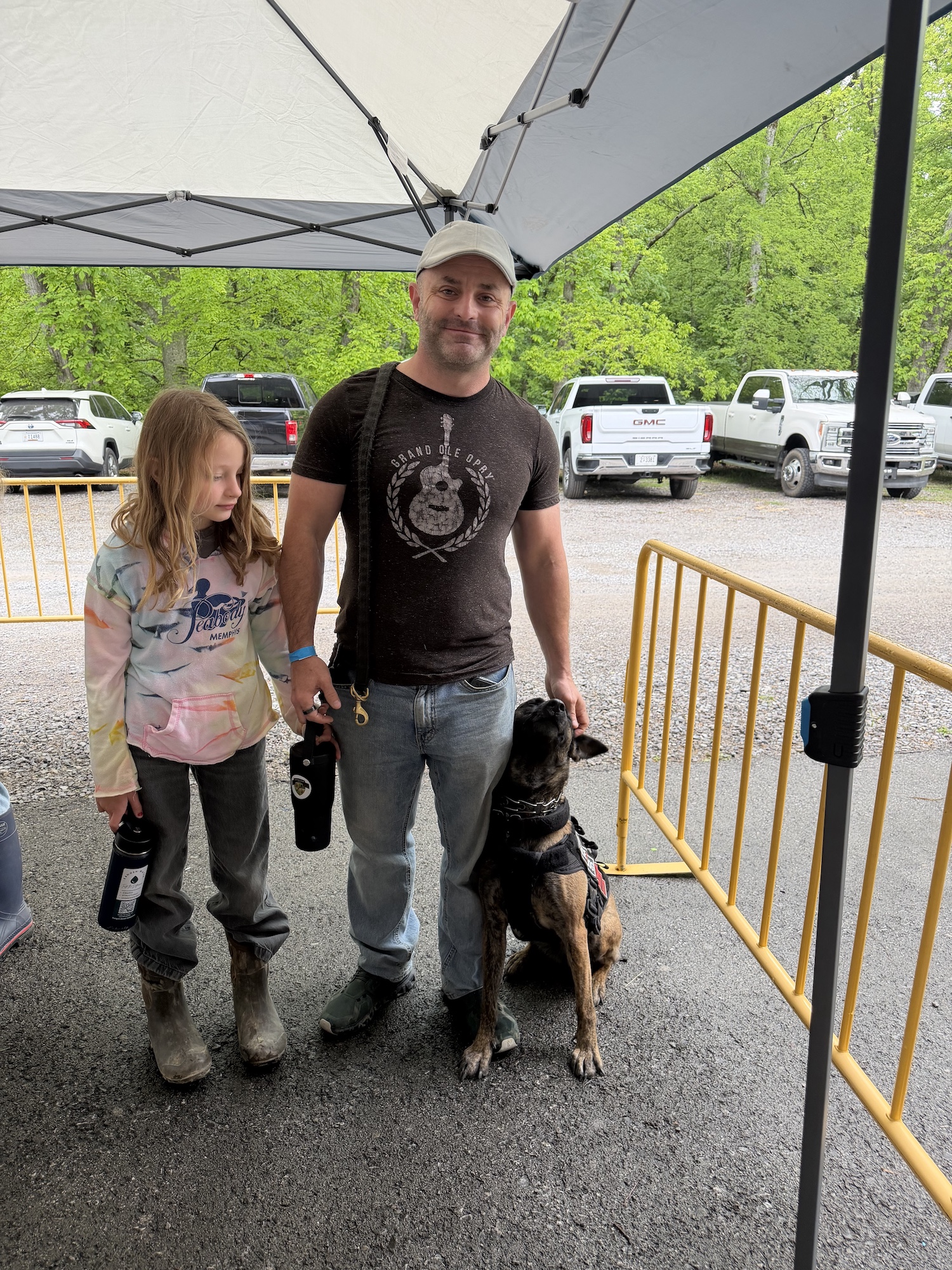
If you are searching for personal protection dogs, you are probably looking for more than a pet.
You may want a dog that travels with you, stays close to your family, moves through public environments, and gives you a stronger layer of security when you are away from home.
That is a serious decision.
The problem is that many people misunderstand what a personal protection dog should actually do.
A personal protection dog is not just a dog that looks intimidating.
It is not just a dog that barks at strangers.
It is not just a dog that bites a sleeve in a video.
A true personal protection dog should be stable, obedient, clear-headed, safe around normal people, and capable of responding when a real threat appears.
If you are ready to discuss whether a Fortress K9 dog fits your security needs, schedule a consultation. If you are still deciding, start with the free Protection Dog Decision Guide.
Why People Look for Personal Protection Dogs
Most people do not search for personal protection dogs because life feels completely safe.
They search because something has changed.
Maybe you travel often.
Maybe your spouse feels vulnerable when alone.
Maybe your family has become more visible.
Maybe your work, property, or public profile has created more exposure.
Maybe there has been a threat, break-in, stalking concern, robbery, violent incident, or close call.
Maybe you simply realized that cameras, alarms, and locked doors do not solve every security problem.
That is usually the real reason buyers start looking.
They are not just shopping for a dog.
They are looking for a serious answer to a security concern.
A properly trained personal protection dog can give you an active layer of security that moves with you. The dog can travel with you, stay near you, alert to problems, create distance, and respond under control if a threat becomes real.
But the dog has to be the right dog.
And the training has to match real life.
A Personal Protection Dog Is Not the Same as a Pet Dog
A good pet dog may be friendly, obedient, affectionate, and enjoyable to live with.
Those are good qualities.
But they do not automatically make the dog a protection dog.
A pet dog may bark when someone comes to the door. It may look intimidating. It may make the owner feel safer.
But under real pressure, many dogs back away, become confused, redirect, panic, or do nothing useful.
A personal protection dog must be trained for a higher standard.
The dog needs obedience.
The dog needs nerve.
The dog needs stability.
The dog needs clarity.
The dog needs the ability to respond under pressure without becoming unsafe in normal life.
That is what separates a real-world protection dog from a pet that simply looks protective.
A Personal Protection Dog Is Also Not Just a Guard Dog
People often use the terms personal protection dog, guard dog, home protection dog, and family protection dog as if they all mean the same thing.
They are related, but they are not identical.
A guard dog is often thought of as a dog that watches property, barks at strangers, or creates deterrence.
A home protection dog is usually focused on protecting the household and family environment.
A family protection dog must be safe with children, guests, household movement, and family life.
A personal protection dog is often more closely tied to the handler. It may move with one person through more environments. It may travel, ride in vehicles, accompany the owner in public areas, and stay close when the owner is away from the home.
That means the standard must include more than aggression.
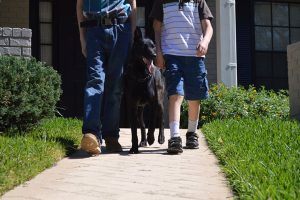
A personal protection dog must be able to move through the real world without treating normal people like threats.
That requires serious selection and training.
If you want help understanding which type of dog fits your situation, schedule a consultation with Fortress K9.
Stability Comes Before Aggression
The first thing to look for in personal protection dogs is not the bite.
It is stability.
Can the dog stay clear-headed in public?
Can the dog ignore normal people?
Can the dog walk calmly with the handler?
Can the dog settle when nothing is happening?
Can the dog distinguish normal life from a real problem?
Can the dog be around guests, family, children, and pets without becoming a liability?
That matters because a personal protection dog is not supposed to create chaos everywhere you go.
A dog that is suspicious of everyone is not more protective.
It is less useful.
A dog that cannot relax is not giving you confidence.
It is creating management problems.
A dog that cannot be controlled around normal people is not a security solution.
It is a risk.
That is why serious protection work starts with the right temperament.
A dog must be stable enough to live in the real world before it is asked to protect in the real world.
Capability Still Matters
Stability alone is not enough.
A calm dog that cannot respond to pressure is not a personal protection dog.
A dog may be obedient, friendly, and easy to live with but still have no ability to stop a determined threat.
A personal protection dog must be capable when it matters.
That means the dog can move toward a real threat, engage under pressure, stay committed, and remain responsive to the handler.
The dog must be able to work through stress, movement, noise, resistance, and environmental pressure.
Real violence does not look like a clean training field.
A threat may happen in a driveway, parking lot, hotel hallway, vehicle area, business entrance, rural property, or inside the home.
The attacker may not stand still.
He may fight back.
He may yell, move, fall, grab, or use the environment.
A dog that only understands predictable training pictures may struggle when reality changes.
That is why a personal protection dog must be trained for real-world protection, not only for a demonstration.
Control Is What Makes Power Useful
A protection dog without control is not finished.
Power is not enough.
A dog that cannot be recalled, released, redirected, or returned to obedience after engagement can create serious problems.
Control matters before the threat.
Control matters during the threat.
Control matters after the threat.
Before the threat, the dog must remain stable around normal people and normal environments.
During the threat, the dog must respond clearly and commit when necessary.
After the threat, the dog must come back under control.
That last part matters.
A dog that turns on but cannot turn off is not a complete protection dog.
That is one of the biggest protection dog buying mistakes serious buyers need to avoid.
Do not buy a dog because it looks powerful.
Buy the standard.
Safe in normal life.
Capable under pressure.
Controlled when the fight is over.
To understand how Fortress K9 separates training levels and capability, review Training Levels & Pricing.
The Switch: Calm Until the Threat Is Real
At Fortress K9, one of the central standards is The Switch.
The dog should be calm and stable in normal life.
Then, when a real threat requires it, the dog should be able to turn on controlled aggression.
Then, when the threat is over, the dog should turn off and return to stability.
That is what most serious buyers actually want.
They do not want a dangerous dog.
They do not want a dog that creates fear in the home.
They do not want a dog that makes public movement impossible.
They want a dog that can walk calmly beside them, live safely with the family, and respond when the threat is real.
That is the difference between a dog that bites and a dog that protects.
If you are still deciding whether this kind of dog fits your life, start with the free Protection Dog Decision Guide.
Personal Protection Dogs Must Fit the Handler
The right dog for one person may be the wrong dog for another.
This is especially important with personal protection dogs.
A dog that fits an experienced handler may be too much for a first-time working-dog owner.
A dog that works well for a single adult may not be the right dog for a family with children.
A dog built for travel and public exposure may need different traits than a dog primarily used around the home.
A dog for a business owner may need different handling expectations than a dog for a spouse who is often home alone.
The match matters.
A serious consultation should look at:
- Your personal security concerns
- Your family structure
- Whether children are in the home
- Whether pets are in the home
- Your travel needs
- Your home environment
- Your public exposure
- Your physical ability
- Your experience with working dogs
- Your comfort with structure and handling
- Your timeline and budget
- The level of protection you actually need
A good protection dog company should not simply ask which dog you like best.
It should help you identify which dog actually fits your life.
Personal Protection Dogs and Family Safety
Even when the dog is called a personal protection dog, family safety still matters.
Most buyers do not live alone in a controlled environment.
They have spouses, children, guests, neighbors, friends, employees, delivery drivers, contractors, and extended family.
That means a personal protection dog must be safe around normal life.
If children are in the home, the standard becomes even higher.
Children move unpredictably. They run. They yell. They hug dogs wrong. They drop food. They invite friends over. They create normal household chaos.
A dog that cannot handle that environment does not belong in that home.
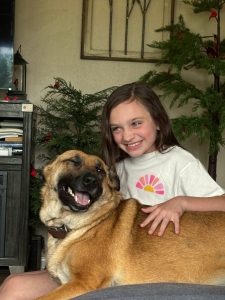
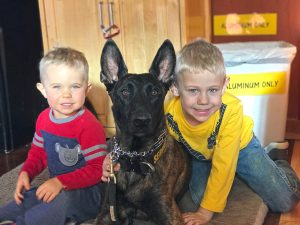
This is why Fortress K9 uses a clear standard:
If a dog is not safe around your children, it is not a protection dog.
The same principle applies to pets and guests.
A dog that cannot be safely managed around normal people and animals may create more risk than it solves.
The right personal protection dog should help protect your family without making your family afraid to live with the dog.
Personal Protection Dogs in Public
Public behavior matters.
A personal protection dog may need to move through more than the backyard or living room.
The dog may ride in vehicles, walk through parking lots, travel, wait outside buildings, move through unfamiliar areas, or stay close to the handler in public settings.
That means the dog must have environmental confidence.
The dog must not fall apart when the surface changes, the noise changes, the crowd changes, or the handler changes direction.
The dog must not view every stranger as a target.
The dog must be able to ignore normal public activity.
That includes people walking past, doors opening, cars moving, children nearby, shopping carts, loud noises, and ordinary movement.
A real personal protection dog should be aware without being unstable.
There is a difference.
Awareness is useful.
Instability is dangerous.
Personal Protection Dogs for Women, Executives, and Families
Different buyers search for personal protection dogs for different reasons.
A woman may want a dog because she feels vulnerable when alone, walking to a vehicle, traveling, or staying at home without her husband.
An executive may want a dog because visibility, travel, wealth, or business exposure creates personal security concerns.
A family may want a dog because the parents want another layer of security at home and in public.
A rural property owner may want a dog because help is far away and the property is isolated.
Those are different situations.
The same dog may not fit all of them.
That is why Fortress K9 does not treat protection dogs as a one-size-fits-all product.
A true personal security dog must be selected and trained around the actual person and environment it will protect.
The goal is not to sell the most intense dog.
The goal is to place the right dog.
What to Look for Before Buying a Personal Protection Dog
If you are evaluating personal protection dogs, do not judge the dog by one video.
A video can show part of the dog.
It cannot show the full picture.
Look for evidence of:
- Stable temperament
- Clear obedience
- Calm behavior when nothing is happening
- Control around normal people
- Confidence in unfamiliar environments
- Safe behavior around family life
- Ability to respond under real pressure
- Reliable release and recall
- Proper handler matching
- Family integration support
- Honest discussion of the dog’s strengths and limits
Ask serious questions.
Can the dog live with children?
Can the dog be around guests?
Can the dog handle pets?
Can the dog move through public areas?
Can the dog be controlled by the person who will actually handle it?
What happens after purchase?
What training does the family receive?
What level of dog is appropriate?
How is the dog tested?
How is the dog matched?
These questions matter because the wrong dog can create false confidence or real liability.
A personal protection dog should reduce risk.
It should not add risk.
Why Cheap Is the Wrong Filter
Price matters.
But with personal protection dogs, cheap is the wrong filter.
The better question is not, “What is the cheapest dog I can find?”
The better question is, “What is the consequence of being wrong?”
If the dog cannot protect you, the purchase failed.
If the dog is unsafe around your family, the purchase failed.
If the dog cannot be controlled, the purchase failed.
If the dog is mismatched to your lifestyle, the purchase failed.
If the dog creates more stress than confidence, the purchase failed.
A premium personal protection dog should represent more than training hours.
It should represent selection, stability, capability, risk reduction, family fit, handler preparation, and confidence in a serious decision.
The cost should be viewed in the context of the outcome.
You are not simply buying a dog.
You are buying a trained security asset that must live safely inside your life.
That standard is not cheap.
And it should not be.
What Fortress K9 Looks for in a Personal Protection Dog
Fortress K9 trains protection dogs for real-world use, not just impressive demonstrations.
That means the dog must be stable enough to live with people and capable enough to matter when a threat becomes real.
The Fortress K9 standard includes:
- Safety in the home
- Obedience and control
- Stability around normal life
- Family suitability
- Real-world protection capability
- Pressure exposure
- Proper matching
- Family Integration Training
- Clear expectations for the buyer
Not every dog qualifies.
Not every buyer needs the same level.
Not every home is the right fit for every dog.
That is why the process matters.
A consultation helps determine whether a personal protection dog is right for you, what kind of dog fits your situation, and what level of training makes sense.
Schedule a consultation with Fortress K9 if you are ready to discuss your security concerns and determine the right next step.
Do You Need a Personal Protection Dog?
You may be a fit for a personal protection dog if:
- You feel your current security is inadequate.
- You travel and want security that moves with you.
- Your spouse or family feels vulnerable when alone.
- You want a dog that can protect without creating instability.
- You want more than cameras, alarms, and passive deterrence.
- You are serious about structure, training, and responsibility.
- You are financially prepared for a premium trained dog.
- You understand that the right dog must be matched carefully.
You may not be ready if:
- You only want the cheapest option.
- You want a dog to scare people without real training.
- You are unwilling to maintain structure.
- You do not want to participate in integration training.
- You expect the dog to solve every security concern without responsibility from the family.
- You are unwilling to be honest about your home, lifestyle, experience, and handling ability.
A personal protection dog is a serious decision.
Education should come before purchase.
A Personal Protection Dog Should Bring Confidence, Not Chaos
The right dog should make your life more secure.
Not more complicated.
The right dog should move with you calmly.
Not drag you through public spaces.
The right dog should be safe around your family.
Not something you have to constantly worry about.
The right dog should be capable when the threat is real.
Not just impressive in a controlled video.
The right dog should be controllable after engagement.
Not dangerous once activated.
That is the Fortress K9 standard.
Safe in the home.
Capable in the fight.
Controlled when the threat is over.
A dog that cannot respond under pressure does not give you protection.
A dog that cannot live safely in your life does not give you peace.
You need both.
Ready to Learn More?
If you are searching for personal protection dogs and want a serious answer, the next step is simple.
Schedule a consultation with Fortress K9 if you are ready to discuss your security concerns, family, lifestyle, timeline, and protection needs.
If you are still deciding whether a protection dog is right for you, start with the free Protection Dog Decision Guide.
If you want to understand the difference between training levels, review Training Levels & Pricing.
FAQ
What is a personal protection dog?
A personal protection dog is a trained dog selected and prepared to protect an individual or family under real-world conditions. The dog should be stable in normal life, obedient, safe around normal people, and capable of responding to a real threat under control.
Are personal protection dogs safe with kids?
They can be, but not every personal protection dog belongs in a home with children. If children are in the home, the dog must be stable, obedient, and safe around normal family life. If a dog is not safe around your children, it is not a protection dog.
Are personal protection dogs safe with pets?
Some personal protection dogs can live with pets, but it depends on the dog, the pets, and the home. This should be discussed before purchase so the right dog is matched to the right family.
What is the difference between a personal protection dog and a guard dog?
A guard dog is often thought of as a dog that watches property or creates deterrence. A personal protection dog is usually more closely tied to the handler and may need to travel, move through public environments, live with the family, and respond to a real threat under control.
Do personal protection dogs need obedience training?
Yes. Obedience is not optional. The stronger the dog, the more important control becomes. A protection dog must be responsive before, during, and after a threat.
Can a personal protection dog go in public?
Some personal protection dogs can move through public environments, but only if they have the right temperament, training, obedience, and handler control. Public stability should be part of the dog’s evaluation and matching process.
How do I know if a personal protection dog is right for me?
Start with your actual security concerns, family structure, lifestyle, travel needs, experience level, and ability to maintain structure. A consultation helps determine whether a personal protection dog is the right solution or whether another protection level fits better.