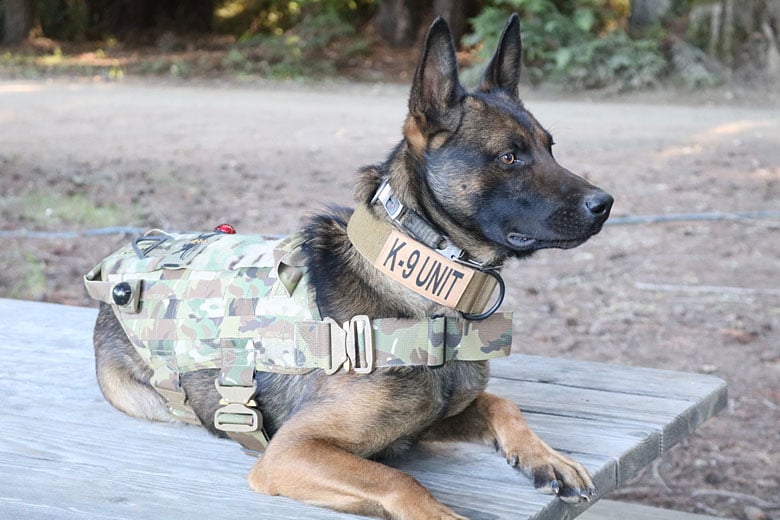
A properly trained protection dog is not cheap.
It should not be.
If you are looking for a serious dog to live with your family, stay safe around your children, remain stable in your home, and respond correctly if a real threat appears, you are not buying a normal pet.
You are making a security decision.
You are also making a family decision.
That is why the better question is not only:
How much does a protection dog cost?
The better question is:
What level of certainty do I need, and what is the consequence of choosing the wrong dog?
A poorly selected protection dog can create danger inside your home.
A poorly trained protection dog can fail when it matters.
A dog that is powerful but unstable can create liability.
A dog that is safe but not capable may give you false confidence.
The right dog must be both.
Safe in the home.
Capable when it matters.
If you are comparing protection dog cost and want to understand what Fortress K9 includes at each level, review Training Levels & Pricing.
If you are still deciding whether a protection dog is right for your family, start with the free Protection Dog Decision Guide before you make a costly mistake.
Protection Dog Cost Depends on the Standard
There is no single price for every protection dog.
That is because not every dog sold as a protection dog is the same thing.
Some dogs are pets with basic obedience.
Some are dogs with bite work.
Some are sport dogs.
Some are imported dogs with titles.
Some are police-style dogs.
Some are personal protection dogs.
Some are true Family Protection Dogs built to live in the home and protect under real pressure.
Those are not the same product.
They do not carry the same risk.
They do not solve the same problem.
They should not cost the same.
When you ask how much a protection dog costs, the first thing you need to know is what kind of dog you are actually looking at.
A dog that barks is not the same as a trained protection dog.
A dog that bites a sleeve is not automatically a protection dog.
A dog that performs in a sport routine is not automatically ready to live with your children.
A dog that is powerful but unsafe is not an asset.
The price should be tied to the standard.
Not the label.
Common Protection Dog Price Ranges
Protection dog prices vary widely across the market.
You may see dogs advertised for $15,000.
You may see trained protection dogs in the $30,000 to $75,000 range.
You may see elite dogs marketed for $100,000, $150,000, or more.
Those numbers can feel extreme until you understand what you are actually comparing.
A lower-priced dog may be:
A young dog with obedience.
A deterrent dog.
A dog with limited protection foundation.
A dog still needing development.
A dog with less testing.
A dog without serious family integration.
A dog that may not be ready for real pressure.
A higher-priced dog may include:
Better selection.
More advanced training.
More testing.
More environmental exposure.
Stronger obedience under pressure.
Better family suitability.
Higher capability.
More support.
More scarcity.
More certainty.
But price alone does not prove quality.
An expensive dog can still be wrong.
A cheaper dog can still be dangerous.
That is why serious buyers should not shop by price alone.
They should shop by standard, fit, training, safety, capability, and support.
What Are You Actually Paying For?
A serious protection dog is not priced like a normal dog because it is not being used like a normal dog.
The price should reflect several things.
1. Correct Selection
Not every dog can do this work.
That is one of the first things buyers need to understand.
A good protection dog starts with the right genetics, health, temperament, drive, nerve, confidence, and stability.
Some dogs are too weak.
Some are too nervous.
Some are too sharp.
Some are too reactive.
Some are not social enough.
Some are not serious enough.
Some are powerful but not safe enough.
Some are safe but not capable enough.
A true Family Protection Dog must be selected for both sides of the job.
The dog has to live correctly with the family.
The dog also has to respond correctly when the threat is real.
That combination is not common.
Scarcity is part of the price.
2. Stability in the Home
For a family, safety comes first.
If a dog is not safe around your children, it is not a protection dog.
That line matters because the wrong dog can make your home less safe instead of more secure.
A protection dog must be able to live around real family life:
Children moving.
Guests visiting.
Pets in the home.
Doors opening.
Noise.
Visitors.
Normal household routines.
Public environments.
A dog that treats normal life like a threat is not a finished family protection dog.
It may be intimidating.
It may be intense.
It may even bite hard.
But it is not the right dog for a family home.
The dog must be stable before it is useful.
3. Obedience Under Pressure
Obedience in calm conditions is not enough.
A protection dog must listen when the situation is loud, fast, and stressful.
The dog must be controllable before, during, and after activation.
That includes moving with the handler.
Staying clear-headed.
Responding to commands.
Coming off a threat when told.
Returning to control.
This is where many dogs fail.
They may obey on a quiet field.
They may obey at home.
They may obey when nothing is happening.
But protection work is not about calm obedience only.
Control matters most when the dog is under pressure.
Power without control is not protection.
It is liability.
4. Real-World Capability
A protection dog must be capable when it matters.
That does not mean the dog is reckless.
It does not mean the dog is aggressive toward normal people.
It does not mean the dog is unstable.
It means the dog can respond when a real threat appears.
Real-world protection does not always look like a clean training demonstration.
A real threat may involve:
A surprise attack.
A home invasion.
A vehicle attack.
More than one attacker.
A weapon.
Tight spaces.
Low light.
Children nearby.
A person who fights back.
A person who does not behave like a training helper.
This is why serious training matters.
A dog trained only for a predictable routine may not understand what to do when the situation changes.
At Fortress K9, the goal is not to create a dog that only bites one target in one clean picture.
The goal is to develop a dog that understands the job: protect the handler and family when the threat is real.
5. Retargeting and Changing Threats
Retargeting is a term that should be explained in plain language.
It means the dog can change focus when the danger changes.
For example, if a dog is engaged with one attacker and a second attacker becomes the bigger threat, the dog may need to shift.
If the attacker starts using a weapon hand, the dog may need to respond to where the danger is coming from.
If the handler is suddenly in danger, the dog may need to come back to protect the handler instead of staying locked onto the first person.
That matters because real threats do not follow rules.
They move.
They resist.
They change.
They create confusion.
A dog that only knows one routine may keep doing that routine even when it is no longer the right answer.
Real protection requires more than a bite.
It requires awareness, control, and the ability to respond to the real problem.
That level of training affects cost.
6. Weapon Pressure, Multiple Attackers, and Surprise Scenarios
This is where buyers need sober clarity.
Protection dog training should not be treated like entertainment.
It is not about making dramatic videos.
It is about preparing the dog for the realities that can happen when a violent person threatens a family.
A real threat may involve a weapon.
A real threat may involve more than one person.
A real threat may happen suddenly.
A real threat may happen at the front door, inside the home, beside a vehicle, or in a tight space.
Those scenarios are harder than a clean training field.
The dog must learn to stay functional under pressure.
The dog must learn that the mission is not simply “bite and stay there forever.”
The mission is to protect the handler and family.
That requires careful training.
It also requires the right dog.
Not every dog can handle that pressure.
Not every dog can do it and still remain safe in the home.
That is the balance buyers are paying for.
Safe with the family.
Serious with the threat.
Controlled after the fight.
7. Family Integration Training
A protection dog is not fully useful until the family knows how to live with the dog.
That is why Family Integration Training matters.
The dog may know the work.
But the family needs to understand:
How to handle the dog.
How to give commands.
How to manage children around the dog.
How to manage guests.
How to maintain structure.
How to move with the dog.
What not to do.
What to expect after go-home.
How to keep the dog successful in the home.
A serious program does not just hand the dog over and hope the family figures it out.
At Fortress K9, Family Integration Training is part of the process because the dog has to function in your actual life, not just in ours.
That support is part of the value.
Why Cheap Protection Dogs Can Be Expensive
A cheap protection dog can become expensive fast.
Not because of the purchase price.
Because of the consequences.
The wrong dog can create:
Safety problems with children.
Liability with guests.
Control problems in public.
Conflict with other pets.
False confidence during a threat.
Failure under pressure.
Costly retraining.
Legal exposure.
Emotional stress.
A dog you cannot safely keep.
The lowest price is not always the best deal.
A protection dog is not the place to gamble on a bargain.
That does not mean the most expensive dog is automatically best.
It means the decision should be based on fit, standard, capability, and support.
Not price alone.
Why Expensive Does Not Automatically Mean Better
Some buyers make the opposite mistake.
They assume that if a dog is expensive, it must be good.
That is not always true.
A high price can reflect quality.
It can also reflect marketing.
Branding.
Scarcity language.
Import costs.
Status positioning.
Or a sales process built around emotion instead of fit.
A serious buyer should still ask hard questions.
Is the dog safe with children?
Is the dog stable in the home?
Can the dog be controlled under pressure?
Has the dog been tested in realistic scenarios?
Does the dog fit my family?
Does the dog match my actual threat profile?
What training does my family receive?
What support is available after go-home?
What level of protection am I actually buying?
Price matters.
But proof matters more.
Protection Dog Cost vs Home Security Systems
Many families compare a protection dog to cameras, alarms, locks, firearms, or private security.
That comparison can be useful, but only if the tools are understood correctly.
Cameras record.
Alarms alert.
Locks delay.
Firearms require access, training, legal judgment, and action under pressure.
Private security may not be present inside your home or with your family at all times.
A trained protection dog is different.
A dog can deter.
A dog can alert.
A dog can move with the family.
A dog can stand between the family and a real threat.
A dog can respond when seconds matter.
That does not mean a dog replaces every other layer.
It does not.
A serious family security plan should use layers.
But a properly trained Family Protection Dog fills a gap that passive tools cannot fill.
That is part of the value.
What Should Be Included in the Price?
Before you judge the cost, ask what is included.
A serious protection dog purchase should include clarity around:
The dog’s level of training.
The dog’s temperament and suitability.
The dog’s health.
The dog’s obedience.
The dog’s protection capability.
The dog’s environmental exposure.
Family safety.
Guest management.
Public behavior.
Family Integration Training.
Handler instruction.
Post-sale support.
Matching process.
Delivery or go-home process.
Ongoing expectations.
If those things are unclear, the price is not clear either.
You are not just buying a dog.
You are buying a standard.
What Fortress K9 Buyers Should Understand About Price
Fortress K9 is not trying to be the cheapest option.
That is not the business model.
That is not the promise.
A family protection dog should be premium, scarce, selective, and properly matched.
The goal is not to sell as many dogs as possible.
The goal is to place the right dog with the right family.
That means some buyers are not a fit.
Some homes are not a fit.
Some timelines are not realistic.
Some budgets are not aligned with the level of dog the buyer wants.
That is better to know early.
A serious dog should not be sold through pressure, hype, or panic.
It should be sold through clarity.
If the investment level is not realistic, start with education.
Read the guide.
Study the training levels.
Understand the difference between a pet, a barking dog, a sport dog, a guard dog, and a true Family Protection Dog.
The right decision starts with the right standard.
When a Protection Dog Is Worth the Cost
A protection dog may be worth the cost when:
You want active protection, not only passive alerts.
You are concerned cameras and alarms may not be enough.
You want a dog that can live safely with your family.
You need a dog that is stable around children and guests.
You want protection that can move with you.
You live on rural or isolated property.
You travel and want your family to have more than a locked door.
You understand that a serious dog requires structure.
You want professional matching, training, integration, and support.
A protection dog is not right for everyone.
But for the right family, the right dog can provide something passive security cannot:
A living, thinking layer of protection inside the family environment.
The Better Question
“How much does a protection dog cost?” is a fair question.
But it should not be the only question.
The better questions are:
What do I need this dog to do?
Is my family ready for this responsibility?
What level of protection do we actually need?
Is the dog safe around children?
Can the dog live in our home?
Can the dog respond under real pressure?
Can the dog turn off?
What happens after the dog comes home?
What happens if we choose wrong?
That last question matters.
Because the cost of the wrong dog is not only financial.
It can be safety.
Liability.
False confidence.
Stress inside your home.
Or a dog that fails when your family needs it most.
The Fortress K9 Standard
Fortress K9 trains Family Protection Dogs around one standard:
Safe in the home.
Capable when it matters.
A dog must be stable enough for family life and serious enough for real threats.
The dog must be able to function around children, guests, pets, and normal household movement.
The dog must also be capable if someone threatens your family.
This balance is what separates a true family protection dog from a dangerous dog, a barking pet, or a sport dog with impressive videos.
If you are comparing protection dog cost, start by reviewing Training Levels & Pricing.
If you are ready to talk about which level fits your family, then scheduling a consultation is the right next step.
If you are not ready to choose yet, start with the free Protection Dog Decision Guide.
If you want to understand the difference between real protection and sport-based training, read Beyond the Bite.
FAQ
How much does a protection dog cost?
Protection dog cost varies widely based on the dog, training level, age, capability, family suitability, and support included. Serious trained protection dogs can cost tens of thousands of dollars, and elite dogs may cost significantly more. The better question is what level of dog your family actually needs.
Why are protection dogs so expensive?
Protection dogs are expensive because the right dog must be selected, trained, tested, matched, and integrated into the family. The price should reflect safety, capability, stability, real-world training, family fit, and support — not just the dog itself.
Are cheaper protection dogs a bad idea?
Not always, but cheap protection dogs can carry serious risk if they are poorly selected, unstable, undertrained, or not safe around children. A low price should not be the main reason to choose a protection dog.
Is an expensive protection dog always better?
No. A high price does not automatically prove quality. Serious buyers should evaluate the dog’s temperament, safety, obedience, real-world capability, family fit, and post-sale support.
What is included in the cost of a Fortress K9 protection dog?
Fortress K9 protection dog pricing depends on the dog and training level. Serious buyers should review Training Levels & Pricing to understand the different levels and then schedule a consultation to discuss fit.
Is a protection dog worth the money?
A protection dog may be worth the money for the right family when the dog adds active protection, deterrence, warning, family stability, and real-world capability. It is not right for every household.
Should I buy a protection dog or improve my home security first?
Some families should improve their home security plan before buying a dog. Others may already be ready for a trained protection dog. If you are unsure, start with the Protection Dog Decision Guide or the Family Protection Plan.