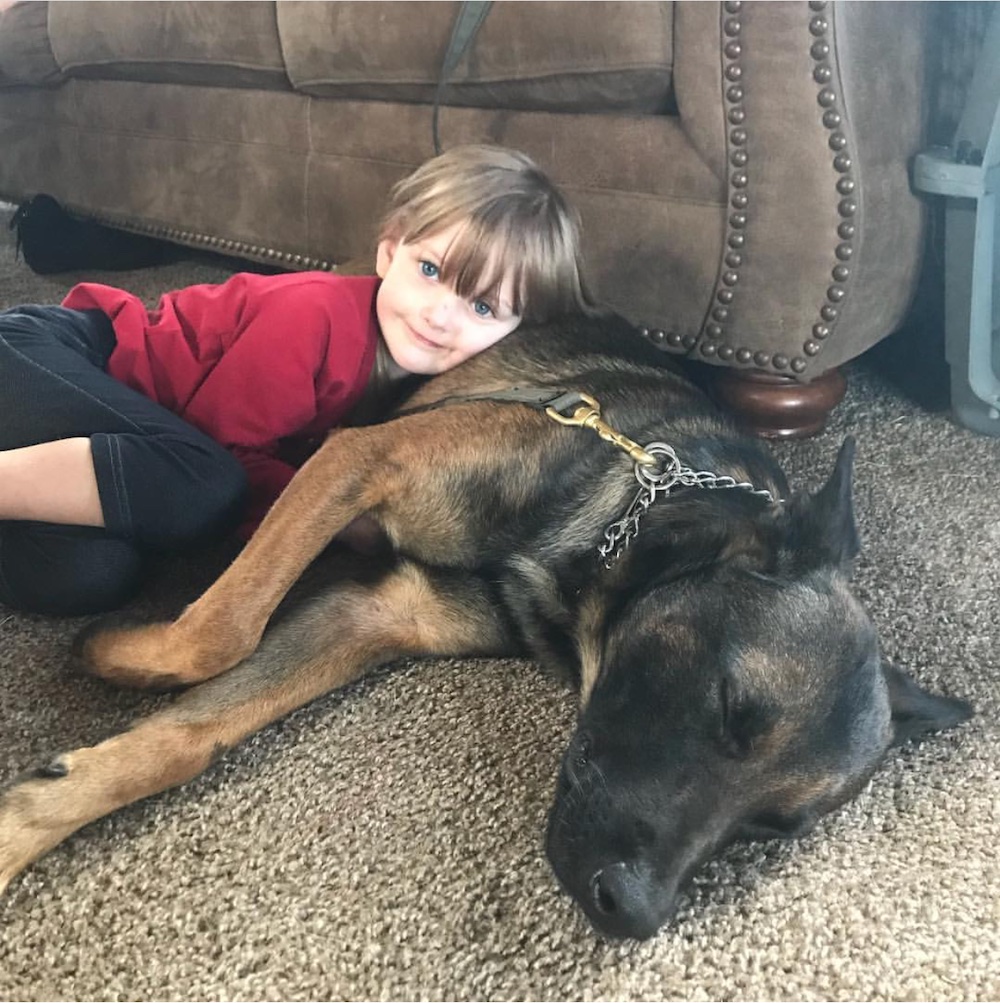
If you are searching for family protection dogs for sale, you are probably not looking for a normal pet.
You are looking for a dog that can help protect your family without creating new risk inside your home.
That is a serious standard.
The right family protection dog should be stable around your children, calm in normal family life, safe around guests, manageable around pets, and capable of responding when a real threat appears.
The wrong dog can do the opposite.
It can create stress, liability, false confidence, and danger around the people you were trying to protect.
If you are ready to discuss whether a Fortress K9 protection dog is right for your family, schedule a consultation. If you are still deciding, start with the free Protection Dog Decision Guide.
Why Families Look for Protection Dogs
Most families do not start looking for a protection dog because everything feels fine.
Something usually makes the security gap obvious.
A break-in happens nearby.
A spouse feels unsafe when home alone.
The buyer travels and worries about the family.
The family moves to a rural property where help is farther away.
A business owner becomes more visible.
A parent realizes cameras, alarms, and locked doors may not be enough if someone is already forcing entry.
That is when the search begins.
The family does not simply want a dog.
They want a better answer to the question:
“How do I protect my family if something actually happens?”
That is why family protection dogs for sale is a serious search term. The buyer is not browsing casually. They are looking for clarity, confidence, and a dog that can live safely with the people they love.
A Family Protection Dog Must Be Safe First
The first standard for a family protection dog is safety.
Not bite power.
Not intensity.
Not appearance.
Not breed.
Safety.
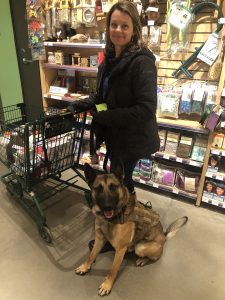
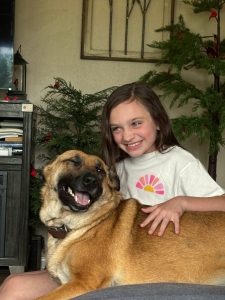
A dog that is supposed to live with your family must be safe in the home. That means stable around children, calm around normal family movement, controllable around guests, and clear enough to understand the difference between normal life and a real threat.
Children run.
Children yell.
Children trip.
Children hug dogs incorrectly.
Children drop food.
Children have friends over.
Children create unpredictable movement inside the home.
That is real family life.
If a dog cannot handle that environment, the dog does not belong in that home.
This is why Fortress K9 uses a clear standard:
If a dog is not safe around your children, it is not a protection dog.
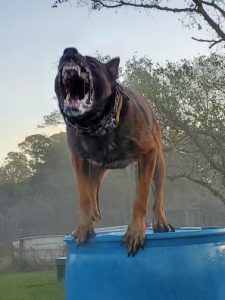
That line matters because some buyers get distracted by videos of dogs biting sleeves or hitting hard in training. Bite work may show part of the dog, but it does not prove the dog belongs in your living room.
A protection dog that is unsafe around your family is not protection.
It is a liability.
Capability Still Matters
Safety is not the whole standard.
A dog can be safe in the home and still fail when the threat is real.
A dog can be affectionate with your children and still back away when someone forces entry.
A dog can bark at the window and still have no real ability to stop a determined attacker.
A true family protection dog must also be capable.
Capability means the dog can respond under pressure. It means the dog has the nerve, clarity, obedience, and training to move toward danger when your family needs time and distance.
A real threat does not happen like a clean training demonstration.
It may happen in a hallway, driveway, parking lot, hotel, rural property, business entrance, or inside the home. The attacker may move, yell, fight back, use the environment, or keep coming after the first contact.
A true real-world protection dog must be trained for that reality.
That is why the Fortress K9 standard is not simply “safe family dog” or “aggressive working dog.”
The standard is both.
Safe in the home.
Capable in the fight.
If you want to understand how Fortress K9 separates training levels, review Training Levels & Pricing.
Do Not Choose a Family Protection Dog by Breed Alone
Breed matters.
German Shepherds, Belgian Malinois, Dutch Shepherds, and other working breeds can produce serious protection dogs.
But breed alone does not make a dog safe, stable, or capable.
A German Shepherd is not automatically a family protection dog.
A Malinois is not automatically too much or automatically better.
A Dutch Shepherd is not automatically the right answer.
The individual dog matters.
The training matters.
The matching process matters.
The family matters.
The handler matters.
The home environment matters.
A dog that works well for one family may be the wrong dog for another family.
This is one of the most common protection dog buying mistakes: choosing the dog based on breed, color, size, appearance, or a dramatic video instead of fit.
A serious family protection dog should be selected around the actual family.
That includes children, guests, pets, home layout, travel needs, experience level, physical ability, and the family’s real security concerns.
The goal is not to buy the most intense dog.
The goal is to buy the right dog.
What a Family Protection Dog Should Be Able to Handle
A family protection dog must live in the real world.
That means the dog should not only work during formal training. The dog must also function during daily life.
A serious family protection dog should be able to handle:
- Children moving through the home
- Guests entering the property
- Normal household noise
- Family routines
- Vehicles and travel
- Public environments when appropriate
- Handler commands under distraction
- Calm downtime
- Sudden stress
- Real threat scenarios
- Return to control after activation
The dog does not need to treat every person as a threat.
That would be instability.
The dog must be aware without being reactive. Stable without being weak. Capable without being chaotic.
That balance is what makes a family protection dog difficult to produce and valuable when done correctly.
If you are unsure whether your family is ready for that responsibility, start with the free Protection Dog Decision Guide.
The Switch: Calm at Home, Capable When It Matters
A true family protection dog needs The Switch.
The dog should be calm and stable in normal life.
Then, when a real threat requires it, the dog should be able to turn on controlled aggression.
Then, when the threat is over, the dog should turn off and return to obedience.
That is the balance most families actually want.
They do not want a dog that is suspicious of every guest.
They do not want a dog that makes children nervous.
They do not want a dog that cannot settle in the home.
They do not want a dog that creates fear inside the family.
They want a dog that can sleep near their children and still respond if someone forces his way through the door.
That is The Switch.
Calm in normal life.
Capable when the threat is real.
Controlled when the fight is over.
Without that switch, the dog is incomplete.
Family Protection Dog vs Family Guard Dog
Many buyers use the terms family protection dog and family guard dog interchangeably.
There is overlap, but they are not always the same thing.
A family guard dog is often thought of as a dog that watches the home, barks at strangers, and creates deterrence.
That may be useful, but it is not the full standard.
A true family protection dog should do more.
The dog should live safely with the family, remain controlled around normal people, understand household life, and have the capability to engage a real threat when necessary.
Barking is not enough.
Looking intimidating is not enough.
Owning a large working breed is not enough.
A true family protection dog must be selected, trained, tested, and integrated around the family that will live with the dog.
That is a higher standard than simply buying a dog that looks protective.
Safe With Kids Does Not Mean Weak
Some buyers worry that if a dog is safe with kids, it will not be strong enough to protect.
That is a misunderstanding.
Safety with children does not mean weakness.
It means stability.
A weak dog may avoid conflict.
An unstable dog may react to the wrong thing.
A true family protection dog must be clear enough to know the difference.
That is why temperament matters so much.
A dog can be affectionate with the family and still serious under threat.
A dog can be calm with children and still capable of controlled aggression.
A dog can rest quietly in the house and still move forward when danger appears.
The question is not whether the dog is friendly or aggressive.
The question is whether the dog is clear.
Clear in the home.
Clear under pressure.
Clear with the handler.
Clear when the threat is over.
That clarity is what makes the dog safe enough to live with and capable enough to matter.
Safe With Pets and Guests
Family life rarely includes only the buyer and the dog.
Most homes include other people.
Many include pets.
That means a family protection dog must be evaluated for the actual home.
Can the dog live with cats?
Can the dog live with small dogs?
Can the dog be managed around other animals?
Can the dog accept normal guests?
Can the dog tolerate extended family, friends, delivery drivers, contractors, and children’s friends?
The answer depends on the dog and the situation.
Not every protection dog should be placed in a home with cats.
Not every dog is the right fit for a home with small children.
Not every dog should be expected to handle constant guests.
This is why honest matching matters.
The right company should not pretend every dog fits every home.
If pets, children, or frequent guests are part of your life, those details should be discussed before a dog is recommended.
That is not a side issue.
It is central to choosing the right family protection dog.
Obedience Makes Power Usable
A family protection dog must have obedience.
Without obedience, power becomes a problem.
The stronger the dog, the more important control becomes.
A family protection dog should respond to the handler. It should understand structure. It should settle when nothing is happening. It should walk under control. It should return to obedience after excitement. It should be manageable in the real home environment.
Obedience is what allows the dog to live with a family.
It is also what allows the dog to be useful during stress.
A dog that cannot obey when calm will not become more reliable when the situation becomes chaotic.
That is why obedience under pressure matters.
The dog must be more than powerful.
The dog must be controllable.
If you want to compare what different training levels include, visit Training Levels & Pricing.
Why the Buying Process Matters
When you search for family protection dogs for sale, it can be tempting to look for the fastest available option.
That is understandable.
If you feel exposed, you want the problem solved.
But speed should not replace fit.
A serious protection dog purchase should include a real conversation about your family, home, lifestyle, security concerns, experience level, children, pets, timeline, and budget.
The company should help you understand what level of dog you need.
It should explain what the dog can and cannot do.
It should be honest about whether a specific dog fits your family.
It should provide training and integration support so your family is not left alone to figure out a powerful dog.
The buying process matters because the stakes are high.
You are not buying a decoration.
You are not buying a status symbol.
You are making a security decision for your family.
That decision deserves clarity.
Schedule a consultation with Fortress K9 if you are ready to discuss your family, home, and protection needs.
Why Family Integration Training Matters
A protection dog does not become useful to your family simply because the dog is trained.
Your family also has to understand how to live with the dog.
That is why Family Integration Training matters.
The family needs to learn how to handle the dog, maintain structure, give commands, manage guests, move through daily routines, and understand the dog’s role inside the home.
This is especially important when children are involved.
A trained dog with an unprepared family can still create confusion.
A strong dog with unclear handling can become harder to manage.
A family protection dog should not be handed over with vague instructions and a handshake.
The handoff matters.
The first days matter.
The family’s confidence matters.
Fortress K9 includes Family Integration Training because the goal is not just to sell the dog.
The goal is for the family to win with the dog.
What to Look For Before Buying a Family Protection Dog
Before buying a family protection dog, look for the full standard.
A serious dog should show:
- Stable temperament
- Safe behavior around children
- Clear obedience
- Control around guests
- Appropriate behavior around pets when required
- Calm household presence
- Environmental confidence
- Protection capability under pressure
- Reliable release and recall
- Proper family matching
- Family integration support
Also look at the seller.
Do they ask serious questions?
Do they care about your home environment?
Do they discuss children and pets?
Do they explain what level of dog fits your family?
Do they talk about safety as much as capability?
Do they offer training after purchase?
Do they tell you when a dog is not the right fit?
Those questions matter.
A seller who only shows bite videos and asks for payment may not be giving you enough clarity.
The wrong dog can make your family less safe.
The right dog can change how your family sleeps, moves, travels, and responds to danger.
How to Know If Your Family Is Ready
Not every family is ready for a protection dog.
That does not mean they never will be.
It means the decision should be made honestly.
Your family may be ready if:
- You have real security concerns.
- You understand this is a serious responsibility.
- You want a dog that is safe in the home and capable under pressure.
- You are willing to maintain structure.
- You are financially prepared for a premium trained dog.
- You are willing to participate in Family Integration Training.
- You want clarity before making a major purchase.
Your family may not be ready if:
- You want the cheapest possible dog.
- You only want something that looks intimidating.
- You are unwilling to follow structure.
- You do not want to participate in training.
- You expect the dog to solve every security issue without family responsibility.
- You are unwilling to discuss children, pets, guests, lifestyle, and handling ability honestly.
A family protection dog is not a casual purchase.
It is a serious security decision.
That is why education should come first.
A Family Protection Dog Should Bring Confidence, Not Chaos
The right dog should help your family feel safer.
Not more restricted.
The right dog should help your wife sleep better when you are away.
Not make her nervous about managing the dog.
The right dog should be safe with your children.
Not something you have to constantly separate from family life.
The right dog should be capable during a real threat.
Not just impressive in a short video.
That is the Fortress K9 standard.
Safe in the home.
Capable in the fight.
A dog that cannot respond to a real threat does not give your family protection.
A dog that cannot live safely in your home does not give your family peace.
You need both.
Ready to Learn More?
If you are searching for family protection dogs for sale, the next step is simple.
Schedule a consultation with Fortress K9 if you are ready to discuss your family, your home, your security concerns, your timeline, and the level of dog that fits your situation.
If you are still deciding whether a protection dog is right for your family, start with the free Protection Dog Decision Guide.
If you want to understand the difference between Core, Family, and Elite protection dogs, review Training Levels & Pricing.
FAQ
Are family protection dogs safe with children?
They can be, but not every protection dog belongs in a home with children. A true family protection dog must be stable, obedient, controlled, and safe around normal family life. If a dog is not safe around your children, it is not a protection dog.
Are family protection dogs safe with pets?
Some family protection dogs can live with pets, but it depends on the dog, the pets, and the home. Cats, small dogs, and other animals should be discussed before a dog is recommended.
What is the difference between a family protection dog and a guard dog?
A guard dog is often thought of as a dog that watches property or creates deterrence. A family protection dog must live safely with the family, remain controlled in normal life, and respond to a real threat when necessary.
What should I look for in a family protection dog?
Look for stability, obedience, safe behavior around children, control around guests, capability under pressure, reliable release and recall, proper matching, and family integration support.
Do family protection dogs need special training after purchase?
Yes. The dog may be trained, but the family still needs to learn how to live with, handle, and maintain the dog. Family Integration Training helps the buyer understand structure, commands, safety, and daily handling.
How do I know if a family protection dog is right for us?
Start with your actual security concerns, family structure, children, pets, home environment, experience level, and willingness to maintain structure. A consultation can help determine whether a protection dog is the right fit.
Are family protection dogs worth the cost?
For the right family, yes. The value is not just the dog. It is the outcome: safety, stability, capability, risk reduction, proper matching, and confidence. The wrong dog can create serious risk, so price should not be the only filter.