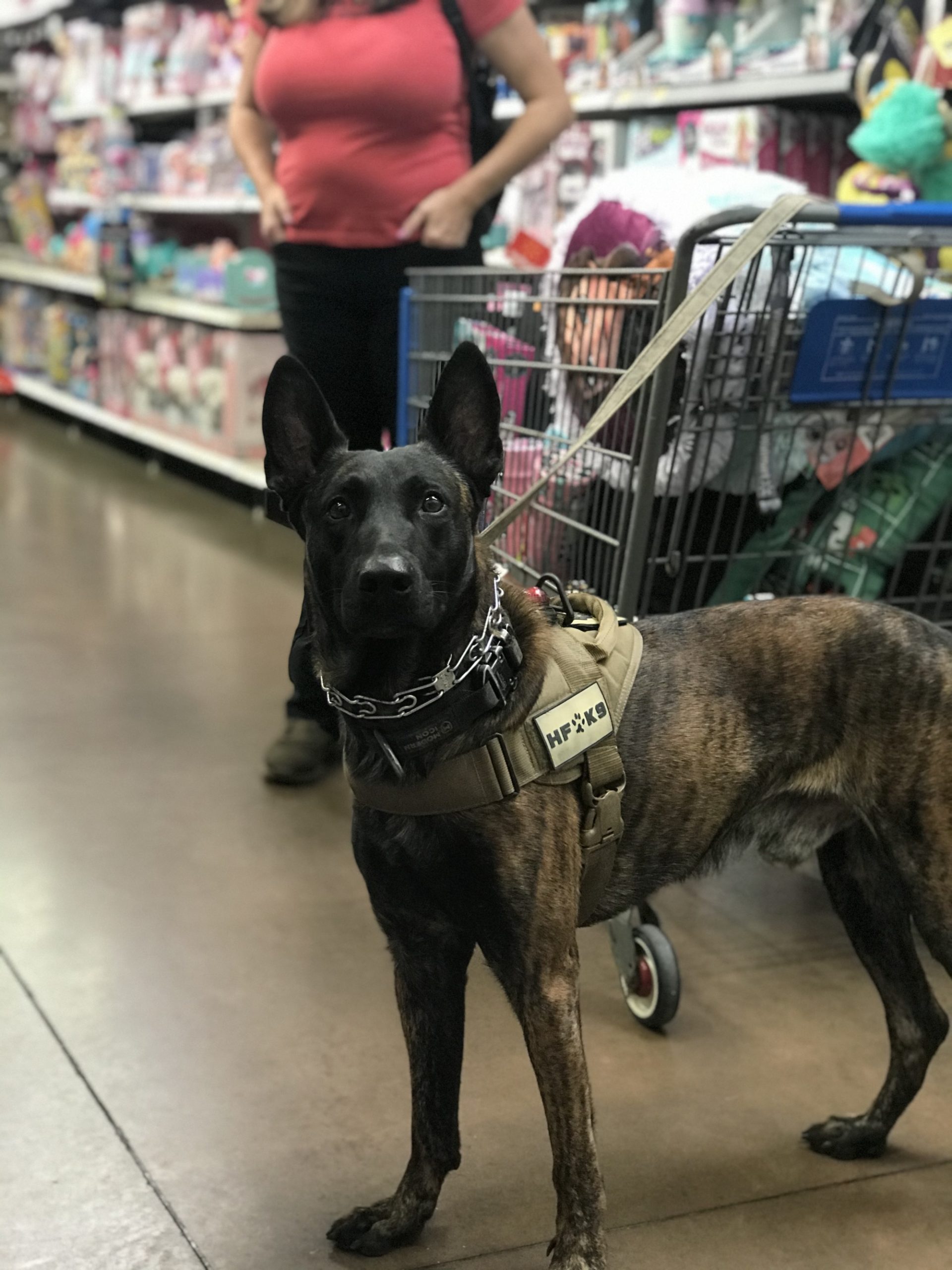
A fully trained protection dog is not a pet purchase.
It is a serious security decision.
The right dog can give your family a living layer of protection, a visible deterrent, and confidence that cameras, alarms, and locks cannot provide by themselves.
The wrong dog can create liability, confusion, danger, and false confidence.
That is why serious buyers should not start with the question, “What dogs do you have available?”
The better question is:
What kind of dog can actually live safely with my family and protect us if the threat is real?
That is the standard.
At Fortress K9, a fully trained protection dog must be safe in the home, stable around the family, obedient under pressure, and capable when it matters.
If you are already looking for a fully trained protection dog, then scheduling a consultation is the right next step.
If you are still deciding whether this is the right move for your family, start with the free Protection Dog Decision Guidebefore you make a costly mistake.
What Is a Fully Trained Protection Dog?
A fully trained protection dog should be more than a dog that knows obedience commands.
It should also be more than a dog that bites a sleeve, barks on command, or looks intimidating.
A real fully trained protection dog should be selected, raised, trained, tested, and matched for a specific purpose: protecting people in real life.
That means the dog must be able to function in the environments where your family actually lives.
Your home.
Your yard.
Your vehicle.
Your driveway.
Public spaces.
Around children.
Around guests.
Around normal household movement.
Around pressure.
Around uncertainty.
A true protection dog has to do two things well.
First, the dog must be safe in normal life.
Second, the dog must be capable when the threat is real.
If either side is missing, the dog is not ready for your family.
A Dog That Bites Is Not Automatically a Protection Dog
Many buyers make the mistake of judging a protection dog by bite work alone.
They see a video of a dog biting a padded sleeve or suit, and they assume the dog is ready to protect a family.
That is not enough.
Bite work can show power, drive, and engagement. But bite work by itself does not prove the dog can make good decisions in a real threat.
A real attacker may not stand still.
A real attacker may not present the perfect target.
A real attacker may fight back.
A real attacker may use a weapon.
A real attacker may attack near your children, beside your vehicle, in a hallway, or inside your home.
A dog trained only to perform a predictable routine may not understand what to do when the situation stops looking like training.
That is why Fortress K9 does not train for sport performance first and hope it works for family protection later.
The mission is different.
A fully trained protection dog must be trained for the kind of pressure that matters in real life.
What Fully Trained Should Mean
When a buyer sees “fully trained protection dogs for sale,” they should look for more than age, breed, color, and bite videos.
A serious dog should be evaluated in several areas.
1. Stable Temperament
Temperament is the foundation.
A protection dog that is unstable, nervous, frantic, or suspicious of everything does not make a family safer.
It makes life harder.
A fully trained protection dog should be confident, clear-headed, and stable enough to live in a normal family environment.
That does not mean the dog is weak.
It means the dog does not treat normal life like a threat.
The dog should be able to settle in the home, move around family members, handle visitors under control, and remain manageable in public environments.
Power without stability is not protection.
It is a liability.
2. Obedience That Holds Under Pressure
Basic obedience is not enough.
Many dogs can sit, down, heel, or stay in calm conditions.
A protection dog must obey when the situation is loud, fast, confusing, or stressful.
That includes coming off a threat when told.
It includes moving with the handler.
It includes staying controlled when people are yelling, moving, or acting aggressively.
It includes listening after the dog has been activated.
That matters because control is what makes power useful.
If the dog cannot be controlled, the dog cannot be trusted.
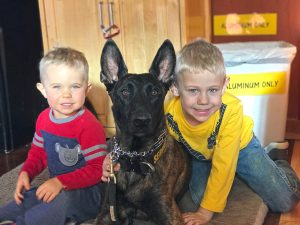
3. Safety Around Children and Family Life
This is non-negotiable.
If a dog is not safe around your children, it is not a protection dog.
A family protection dog must be able to live in the real world of family life.
Children move fast.
They make noise.
They drop things.
They run.
They cry.
They hug.
They fall.
They create unpredictable movement that many dogs are not prepared to handle.
That does not mean a protection dog cannot live with children.
It means the dog must be selected and trained for that reality.
A true family protection dog should be safe in the home before it is ever asked to respond to a threat.
That is why Fortress K9 places such a high priority on stability, obedience, family fit, and Family Integration Training.
The dog does not just need to perform for the trainer.
The dog needs to work for your family.
4. The Switch
A serious protection dog needs what we call The Switch.
That means the dog can be calm and stable in normal life, respond when a true threat requires action, and then turn off when the threat is over.
This is one of the most important differences between a dangerous dog and a trained protection dog.
A dangerous dog may be aggressive without judgment.
A trained protection dog should be controlled, clear, and directed.
The dog should not stay locked in aggression after the moment has passed.
The dog should not redirect onto family members.
The dog should not treat children, guests, or normal household movement as threats.
A protection dog has to do more than turn on.
It has to turn off.
5. Real-World Protection Training
Real protection does not happen on a groomed field under clean conditions.
It may happen in a hallway.
At a front door.
Beside a vehicle.
In a parking lot.
During a surprise attack.
During a home invasion.
Against someone who fights back.
Against more than one person.
Against someone who uses a weapon or the environment.
That is why real-world training matters.
A fully trained protection dog should be prepared for pressure, movement, noise, confusion, and resistance.
This does not mean the dog should be reckless or aggressive toward everyone.
It means the dog should understand the job.
The dog is not there to perform a trick.
The dog is there to protect the handler and family when the threat is real.
Why Retargeting Matters
Retargeting is one of the terms that can sound technical, but the idea is simple.
Retargeting means the dog can change focus when the situation changes.
For example, if a dog is engaged with one part of a threat, but the attacker starts using the other hand as the real danger, the dog may need to shift. If another attacker becomes the greater threat, the dog may need to disengage and respond to the new problem. If the handler is suddenly in danger, the dog may need to come back to protect the handler instead of staying locked onto the first person.
This matters because real violence does not follow a routine.
A dog trained only to bite and hold one target may keep doing that even when the situation changes.
That may look obedient.
But in real life, it may be the wrong answer.
A protection dog should not be trained merely to bite a target.
The dog should be trained to protect the family.
That requires awareness, control, and judgment under pressure.
Weapons Change the Problem
A real attacker may use a weapon.
That changes the situation.
If someone is striking the dog, reaching for a weapon, or using an object to create injury, the dog cannot be trained to ignore that reality just because a sport routine rewards holding one position.
In plain language, the dog needs to understand where the danger is coming from.
That does not mean the dog becomes uncontrolled.
It means the dog is trained for the reality that violent people do not always stop because a dog bites them.
A fully trained protection dog should have exposure to pressure that helps the dog stay functional when the fight becomes harder.
That kind of training has to be done carefully.
It is not about creating a reckless dog.
It is about creating a dog that can stay in the fight when the threat is real and still return to control when the fight is over.
Multiple Attackers Are Different From One Attacker
A family protection dog may face a situation where more than one person is involved.
That changes the job.
If the dog is only trained to engage one person and stay there forever, the dog may miss the larger threat.
A second attacker could move toward the handler.
A second attacker could move toward the family.
A second attacker could create the greater danger.
A properly trained dog must learn that the mission is not simply, “bite one person.”
The mission is to protect the handler and family.
That requires the dog to stay aware, respond to the most important threat, and remain connected to the handler.
Again, this must be balanced with control.
A dog that cannot be called off, redirected, or managed after activation is not ready for a family.
Capability matters.
Control matters just as much.
Home Invasion Scenarios Matter
A home invasion is not clean or predictable.
It may involve darkness, loud noise, children moving, tight hallways, slippery floors, furniture, panic, multiple people, and uncertainty.
A dog trained only in clean, predictable environments may not be ready for that.
A serious family protection dog should be exposed to realistic scenarios that help prepare the dog for the kind of pressure a family may actually face.
That does not mean the home should feel like a war zone.
It means the dog must understand that protection may happen inside real environments, not only on a training field.
The dog must still be safe in that same home the next morning.
That is the Fortress K9 standard.
Safe in the home.
Capable when it matters.
Vehicle Attack Scenarios Matter
Threats do not only happen at the front door.
They can happen around vehicles.
A parking lot.
A driveway.
A gas station.
A stop during travel.
A vehicle creates a different kind of pressure because space is tight, movement is limited, and the family may be entering or exiting when the threat appears.
A protection dog should be prepared for the reality that danger can happen around a vehicle, not just in a wide-open training area.
This matters for families who travel, business owners, rural families, and anyone who wants protection that moves with them.
The dog must be able to work through that pressure without becoming unsafe in normal travel.
Surprise Attack Scenarios Matter
Most real threats do not announce themselves politely.
A serious protection dog should not only be trained for obvious demonstrations.
The dog should also be prepared for sudden movement, ambush-style pressure, and situations where the threat appears quickly.
That matters because surprise changes people.
It changes dogs too.
A dog that only performs when everything is expected may struggle when the picture changes.
A fully trained protection dog should have the confidence and clarity to respond when the situation becomes sudden and uncomfortable.
But that capability must never erase the family standard.
The same dog must still be able to relax in the home, accept normal family life, and remain safe around children.
Breed Alone Is Not Enough
German Shepherds, Belgian Malinois, and Dutch Shepherds can all be strong candidates for protection work when they come from the right genetics and are developed properly.
But breed alone is not enough.
A poorly bred German Shepherd is not automatically a protection dog.
A high-drive Malinois is not automatically safe for a family.
A Dutch Shepherd with intensity but poor stability may create more problems than it solves.
The dog must be selected for the mission.
That includes temperament, nerve, health, trainability, stability, drive, confidence, and the ability to live correctly in the home.
Do not buy a breed label.
Buy the standard.
Fully Trained Does Not Mean Fully Automatic
A trained protection dog is not a machine.
The family still matters.
The handler still matters.
The home structure still matters.
That is why the buying process should include more than delivery.
A serious buyer should expect guidance on how the dog fits into the family, how the dog should be handled, what rules matter, how children should interact with the dog, how guests should be managed, and what ongoing structure is needed.
At Fortress K9, the dog is not simply handed over and left for the family to figure out.
The family comes through integration training so they understand how to live with, handle, and maintain the dog before taking the dog home.
That step matters because a powerful dog must be paired with clear handling.
What Serious Buyers Should Ask
Before buying a fully trained protection dog, ask better questions.
Do not only ask:
“How hard does the dog bite?”
Ask:
Is the dog safe around children?
Is the dog stable in the home?
Can the dog be around guests under control?
Can the dog live with the family’s actual lifestyle?
Has the dog been trained for real-world pressure?
Can the dog be called off?
Can the dog turn off after activation?
Has the dog been exposed to home, vehicle, and surprise scenarios?
Does the dog understand more than one attacker?
Has the dog been trained to deal with a threat that fights back?
What happens after the dog comes home?
What support does the family receive?
How is the dog matched to the buyer?
What level of protection does this family actually need?
Those questions tell you more than a bite video.
When a Fully Trained Protection Dog Makes Sense
A fully trained protection dog may be the right decision when:
You want active protection, not just passive alerts.
You are concerned that cameras and alarms may not be enough.
You want a dog that can live safely with your family.
You need a dog that is stable around children and guests.
You want protection that can move with you.
You understand this is a serious responsibility.
You are looking for a finished dog, not a puppy project.
You want professional matching, training, and integration support.
A protection dog is not right for everyone.
But for the right family, the right dog can provide a level of confidence that passive security cannot.
The Fortress K9 Standard
Fortress K9 trains fully trained protection dogs around one standard:
Safe in the home.
Capable when it matters.
That means the dog must be stable enough for family life and serious enough for real threats.
The dog must be able to live around children, guests, and normal household movement.
The dog must also be capable under pressure if someone threatens the family.
This is not sport training.
This is not a barking pet.
This is not a dangerous dog dressed up as protection.
This is a selected, trained, tested, and integrated protection dog built for the family environment.
If you are ready to purchase a trained Fortress K9 Protection Dog, then scheduling a consultation is the right decision.
If you want to compare the levels of training and investment before scheduling, review Training Levels & Pricing.
If you are still deciding whether a protection dog is right for your family, start with the free Protection Dog Decision Guide.
If you want to understand real protection dogs before moving forward, read Beyond the Bite.
FAQ
What is a fully trained protection dog?
A fully trained protection dog is a dog selected, trained, and prepared to protect a person or family under real-world conditions. The dog should be obedient, stable in normal life, safe around the family, and capable when a real threat appears.
Are fully trained protection dogs safe with children?
A properly selected and trained family protection dog can be safe with children, but not every protection dog belongs in a family home. The dog must be stable, controllable, properly matched, and integrated into the household. If a dog is not safe around your children, it is not a protection dog.
How much does a fully trained protection dog cost?
The cost depends on the dog, level of training, capability, and support included. Fortress K9 buyers should review Training Levels & Pricing and then schedule a consultation to determine what level of protection fits their family.
What is the difference between a trained protection dog and a guard dog?
A guard dog may alert, bark, or deter, but a true protection dog must be safe with the family and capable of responding under control when a real threat appears. Stability, obedience, judgment, and handler control are critical.
Is sport training the same as protection dog training?
No. Sport training and real-world family protection have different goals. Sport training may involve controlled routines, predictable targets, and field-based exercises. Real-world family protection must prepare the dog for pressure, confusion, family life, and threats that do not follow rules.
Can a protection dog live in the house?
A true family protection dog should be able to live safely in the home. The dog must be stable around normal family life and able to turn off when there is no threat.
What should I ask before buying a protection dog?
Ask whether the dog is safe with children, stable in the home, controllable under pressure, trained for real-world threats, matched to your family, and supported after go-home. Do not judge the dog by bite videos alone.