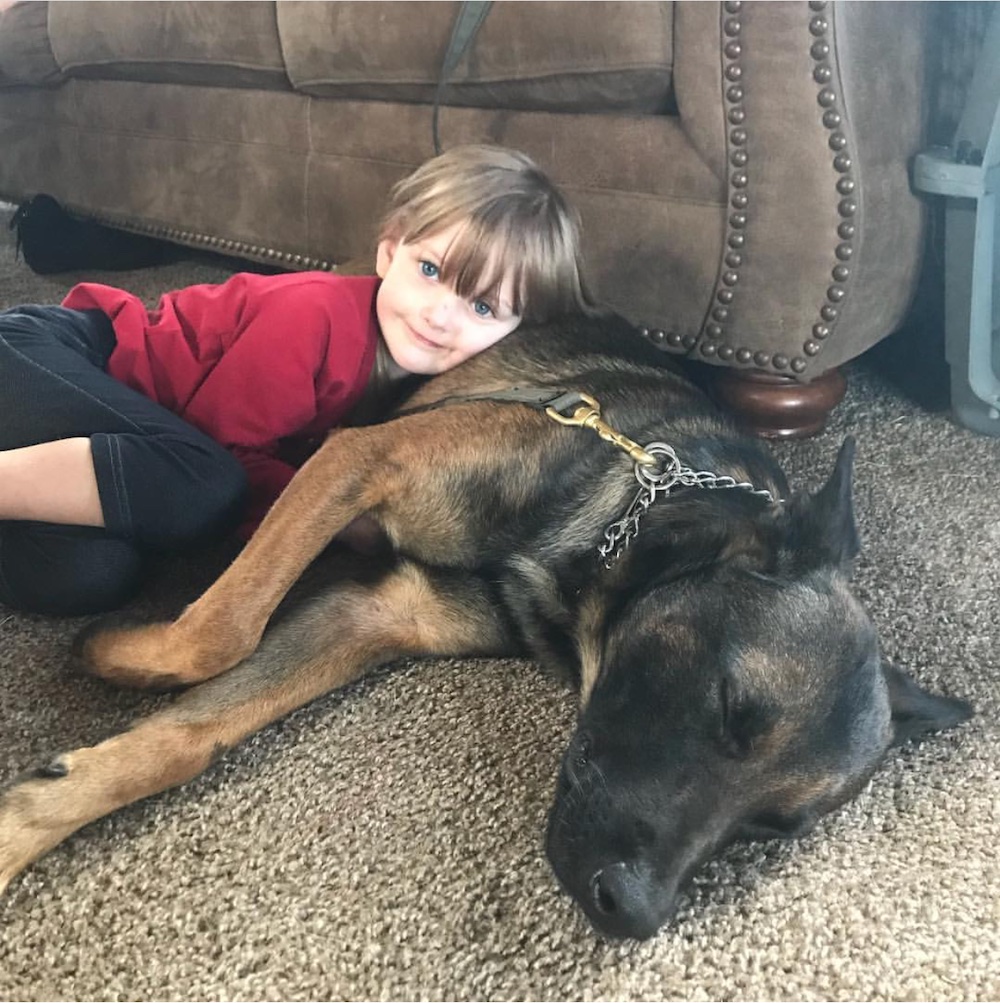
When families start researching family protection dogs, one of the first concerns is usually not whether the dog is powerful enough.
It is whether the dog can be powerful and still be safe.
That concern is valid.
A real family protection dog must live inside the home. It must be safe around children, stable around normal family life, calm around guests, manageable in public, and still capable of responding when a real threat appears.
That balance does not happen by accident.
At Fortress K9, the standard is simple:
Safe in the home.
Capable in the fight.
A dog that cannot respond to a real threat does not give your family protection. But a dog that cannot live safely inside your home does not give your family peace.
If you are trying to decide whether a protection dog is right for your family, start with the free Protection Dog Decision Guide. If you already know your family needs real protection, schedule a consultation with Fortress K9.
Why Families Worry About Powerful Protection Dogs
Many people picture a protection dog as intense, aggressive, constantly alert, and difficult to manage.
That image is understandable.
Working breeds like Belgian Malinois, Dutch Shepherds, and working-line German Shepherds are powerful dogs. They can be fast, intense, athletic, driven, and serious when trained for protection work.
But power alone is not the goal.
A dog that is intense all the time is not a finished family protection dog.
A dog that cannot settle in the house is not ready for a family.
A dog that treats every visitor as a threat is not safe.
A dog that cannot be controlled around children, pets, or normal movement is not protection. It is a liability.
The real question is not whether a powerful dog can bite.
The real question is whether that dog can live calmly with your family and still respond when a real threat requires it.
That is the standard most buyers are actually looking for.
A Family Protection Dog Must Be Safe in the Home
A protection dog for families has to meet a higher standard than a dog built only for sport, police work, or kennel-based demonstrations.
Your home is not a training field.
Your children are not decoys.
Your guests are not threats.
Your family life includes noise, movement, stress, distractions, doors opening, children running, pets moving, friends visiting, contractors arriving, delivery drivers walking up, and people behaving unpredictably.
A true family protection dog has to understand normal life.
That means the dog must be:
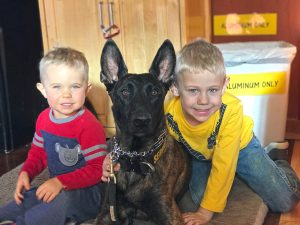
- Safe with kids
- Stable around family
- Controlled around guests
- Calm in the house
- Clear under stress
- Obedient around distractions
- Capable of turning off when nothing is happening
This is why Fortress K9 preserves one clear line:
If a dog is not safe around your children, it is not a protection dog.
That line is not marketing language. It is a standard.
A dog can have a strong bite and still be wrong for a family. A dog can look impressive in a video and still be unstable in the home. A dog can perform well in a controlled drill and still be unsafe around the people you are trying to protect.
Family protection starts with stability.
Capability Still Matters
Safety alone is not enough.
A dog can be calm in the house and still fail when the threat becomes real.
A dog can be sweet with children and still back away when someone forces entry.
A dog can bark at a window and still have no ability to stop a determined attacker.
That is not protection.
A true real-world protection dog must have capability. It must have the nerve, clarity, obedience, and training to move toward danger when your family needs time and distance.
Real violence is not clean.
A threat may happen in a hallway, driveway, parking lot, hotel, business entrance, rural property, vehicle area, or inside the home. The attacker may fight back, move, yell, use the environment, or keep coming after the first contact.
A family protection dog must be prepared for more than a predictable training picture.
That is why the Fortress K9 standard is not “calm family dog” or “aggressive working dog.”
It is both.
Safe in the home.
Capable in the fight.
To compare the different levels of Fortress K9 protection dogs, review Training Levels & Pricing.
Powerful Breeds Can Be Calm When They Are Developed Correctly
Malinois, Dutch Shepherds, and working-line German Shepherds are not automatically unstable.
They are also not automatically family protection dogs.
The difference is development.
A powerful working breed can be calm in the home when the dog is raised, exposed, handled, trained, corrected, rewarded, tested, and integrated properly.
The problem is not power.
The problem is unmanaged power.
A dog with strong drives needs structure. The dog needs clear expectations. The dog needs to learn how to settle. The dog needs exposure to normal life. The dog needs obedience. The dog needs to understand when it is time to work and when it is time to be calm.
Without that development, the same traits that make the dog impressive in protection work can become problems in the home.
Drive without control becomes chaos.
Energy without structure becomes stress.
Power without stability becomes risk.
But when the dog is developed correctly, those same traits can become useful.
The dog can be calm with the family, aware of the environment, obedient to the handler, and capable of action when needed.
That is the point.
Calm Behavior Starts Early
A family protection dog should not begin its development the day someone decides to buy it.
The foundation starts early.
From puppyhood, the dog should be exposed to structure, handling, household movement, people, surfaces, noises, and environments that help shape stability.
This does not mean flooding the puppy or forcing stress before the dog is ready.
It means building confidence correctly.
A puppy that will eventually become a family protection dog needs to learn that normal life is normal.
Children moving should not be confusing.
Household noise should not be a crisis.
New surfaces should not shut the dog down.
Human handling should not create conflict.
Travel, crates, leashes, and daily structure should become familiar.
This early development matters because the adult dog will eventually be expected to live in a home and handle real pressure.
If the foundation is unstable, the finished product will be inconsistent.
That is one reason Fortress K9 controlling the dog’s development from birth through go-home can create more consistent results.
The dog is not being built from disconnected pieces.
The dog is being developed toward a clear final standard.
Environmental Exposure Builds Stability
A protection dog that only works in one place is not finished.
Families do not live in one controlled environment.
They move between the house, yard, vehicle, street, vet, training area, public spaces, hotels, rural property, and unfamiliar locations.
A serious family protection dog must learn how to handle environmental change.
That includes:
- Different surfaces
- New sounds
- Vehicles
- Crates
- Doorways
- Stairs
- Public movement
- Strangers nearby
- Children moving
- Other animals when appropriate
- Pressure and distraction
The goal is not to make the dog reactive to everything.
The goal is the opposite.
The dog should learn that most of the world is not a threat.
That clarity matters.
A dog that is suspicious of everything is not more protective. It is less reliable.
A dog that can stay calm in normal environments has a clearer mind when something actually matters.
That is what buyers should want: a dog that is aware without being unstable.
Obedience Is the Control System
Obedience is not decoration.
For a protection dog, obedience is the control system.
The stronger the dog, the more important obedience becomes.
A family protection dog must know how to live under structure. The dog must understand commands. The dog must respond to the handler. The dog must settle when nothing is happening. The dog must return to control after excitement.
Without obedience, power becomes a problem.
A dog that cannot obey in the home will not become easier to manage under stress.
A dog that cannot walk calmly, stay in place, come when called, release when commanded, or settle around normal family life is not ready to be trusted as a protection dog for a family.
This is why protection dog training must include more than bite work.
The bite may be the most visible part.
Obedience is what makes the dog usable.
Control is what makes the dog safe.
If you want to understand how obedience, protection work, and family readiness fit together, read Beyond the Bite.
Bite Work Does Not Have to Create an Unstable Dog
Some people assume that protection training makes a dog dangerous in the home.
Bad training can.
Poor selection can.
Unclear handling can.
Improper development can.
But correct protection training should not create a dog that is unsafe around the family.
A serious dog must learn when protection work is appropriate and when it is not.
The dog should not live in a constant state of suspicion. The dog should not be looking for conflict. The dog should not treat every unfamiliar person as a threat.
That is where clarity matters.
Bite work should develop controlled aggression, confidence, targeting, commitment, and response under pressure. It should not erase obedience. It should not replace stability. It should not make the dog chaotic.
The dog must be trained to engage when the picture requires it and return to control when the threat is over.
That is the difference between creating a dangerous dog and developing a real family protection dog.
Pressure Testing Reveals the Truth
A protection dog should not only look good when everything is easy.
The real question is what the dog does when pressure increases.
Pressure testing helps reveal whether the dog has the nerve, clarity, and commitment needed for real work.
Can the dog stay engaged when the decoy fights back?
Can the dog handle noise, movement, impact, resistance, and environmental stress?
Can the dog keep working when the situation becomes less predictable?
Can the dog respond to the handler after activation?
Can the dog come off and return to control?
Those questions matter because real threats do not follow sport rules.
A dog that only performs when the picture is familiar may struggle when the situation changes.
A true protection dog must be able to function under pressure.
But pressure testing must be built on the right foundation.
A dog should not be pushed into pressure before it has the confidence, obedience, and clarity to handle it. Otherwise, training can create problems instead of revealing readiness.
The goal is not to make the dog frantic.
The goal is to build and test controlled capability.
The Switch: Calm Until the Threat Is Real
The Switch is one of the clearest ways to understand what Fortress K9 is building.
A dog should be calm and stable in normal family life.
Then, when a real threat requires it, the dog should be able to turn on controlled aggression.
Then, when the threat is over, the dog should turn off and return to control.
That is The Switch.
Not constant aggression.
Not nervous suspicion.
Not a dog that is always “on.”
A real family protection dog should be able to rest in the home, move calmly with the family, accept normal life, and remain safe around the people who belong there.
Then, if someone forces a real threat onto the family, the dog should be able to respond.
That is what buyers mean when they say they want to keep their family safe.
They do not want a dog that makes the home harder to live in.
They want a dog that makes the home more secure.
If you are unsure whether your family is ready for that kind of responsibility, start with the free Protection Dog Decision Guide.
Why Development From Birth Through Go-Home Matters
Many protection dogs are developed in pieces.
One person breeds the dog.
Another person raises the dog.
Another person starts the dog.
Another person trains the dog.
Another person sells the dog.
That can work when the process is strong, but it can also create gaps.
Fortress K9’s advantage is control over the development process.
When a dog is developed from birth through go-home with the final family protection standard in mind, the training can be more consistent.
The dog can be evaluated early.
Foundation can be built intentionally.
Environmental exposure can be shaped.
Obedience can be developed alongside confidence.
Bite work can be introduced in context.
Pressure testing can be added progressively.
The dog’s strengths and limits can be observed over time.
That matters because family protection is not a single skill.
It is the combination of temperament, development, training, control, capability, and fit.
A dog is not ready simply because it has been taught to bite.
A dog is ready when it can meet the full standard.
Safe in the home.
Capable in the fight.
Family Integration Still Matters
Even a well-trained dog needs proper integration.
The family must learn how to live with the dog.
They need to understand commands, structure, boundaries, handling, routines, guest management, household expectations, and how to maintain the dog’s training.
A family protection dog should not be dropped off with vague instructions.
The handoff matters.
The first days matter.
The family’s confidence matters.
Children, guests, pets, routines, and the home environment all affect the dog’s transition.
That is why Family Integration Training is part of the Fortress K9 process.
The goal is not just to place a powerful dog.
The goal is to help the family succeed with that dog.
A protection dog should add confidence to the home, not confusion.
Schedule a consultation if you want to discuss what level of Fortress K9 dog fits your family, home, and security concerns.
What Families Should Look For Before Buying
If you are considering family protection dogs, do not judge only by breed, bite videos, or appearance.
Look for the full picture.
A serious family protection dog should show:
- Stability in the home
- Safety around children
- Clear obedience
- Control around guests
- Environmental confidence
- Ability to settle
- Real-world protection capability
- Pressure-tested commitment
- Reliable release and recall
- Proper family matching
- Family integration support
Also look at the company.
Do they talk about safety as much as power?
Do they ask about your children, pets, guests, lifestyle, experience, and home environment?
Do they explain the difference between real protection and sport-based training?
Do they offer integration support after purchase?
Do they tell you when a dog is not the right fit?
Those questions matter.
The wrong dog can make your family less safe.
The right dog can change how your family sleeps, moves, travels, and responds to danger.
Calm at Home Does Not Mean Weak
Some buyers worry that a calm dog will not protect.
That is a misunderstanding.
Calm does not mean weak.
Calm means clear.
A clear dog does not waste energy reacting to everything. It does not treat every movement as a threat. It does not live in constant conflict with the environment.
A clear dog knows how to exist in normal life.
Then, when the situation changes, the dog can respond.
That is the standard.
A family protection dog should not be unstable in the name of protection.
It should be controlled enough to live with your family and capable enough to matter when the threat is real.
That balance is difficult to produce.
That is why it has value.
Ready to Learn More?
If you are considering family protection dogs, the next step is simple.
If you already know your family needs real protection, schedule a consultation with Fortress K9.
If you are still deciding whether a protection dog is right for your home, start with the free Protection Dog Decision Guide.
If you want to compare training levels, review Training Levels & Pricing.
A true protection dog should not force you to choose between safety and stability.
You need both.
Safe in the home.
Capable in the fight.
That is the Fortress K9 standard.
FAQ
Can family protection dogs really be calm in the home?
Yes, when the dog is properly selected, developed, trained, and integrated. A real family protection dog should be calm in normal life and capable when a real threat appears.
Are family protection dogs safe with kids?
They can be, but not every protection dog belongs in a home with children. A true family protection dog must be stable, obedient, controlled, and safe around normal family life. If a dog is not safe around your children, it is not a protection dog.
Does protection training make a dog aggressive all the time?
It should not. Proper protection training should create controlled capability, not constant aggression. The dog should understand when to engage and when to remain calm.
What is The Switch in a protection dog?
The Switch means the dog is calm and stable during normal family life, capable of controlled aggression when a real threat requires it, and able to turn off and return to control afterward.
Why does early development matter in a family protection dog?
Early development shapes confidence, stability, environmental comfort, obedience, and clarity. A dog developed correctly from the beginning is more likely to handle family life and protection work consistently.
What breeds make good family protection dogs?
Working-line German Shepherds, Belgian Malinois, and Dutch Shepherds can all produce strong protection dogs, but breed alone is not enough. The individual dog, training, temperament, and family fit matter more than breed label.
How do I know if a family protection dog is right for my family?
Start by looking at your security concerns, children, pets, home environment, experience level, and willingness to maintain structure. A consultation can help determine whether a family protection dog is the right fit.