If you are searching for home protection dogs for sale, you are probably not just looking for a dog.
You are looking for a better answer to a security concern.
You may already have cameras. You may already have an alarm. You may already lock your doors, own a firearm, live in a gated community, or pay attention to your surroundings.
Those things matter.
But they do not solve every problem.
A camera can record a threat.
An alarm can make noise.
A lock can slow someone down.
A firearm only matters if you can reach it, process what is happening, and act in time.
A trained home protection dog changes the equation because the dog is already present, already alert, already living with your family, and capable of responding before you may fully understand what is happening.
If your current security plan has gaps, schedule a consultation with Fortress K9 to find out whether a trained protection dog is the right fit for your family. If you are still deciding, start with the free Protection Dog Decision Guide.
Why Families Start Looking for Home Protection Dogs
Most serious buyers do not wake up one morning and casually decide to shop for a protection dog.
Something usually changes.
A break-in happens nearby.
A spouse feels unsafe when home alone.
The family moves to a more isolated property.
The buyer travels often and worries about the family at home.
A business owner becomes more visible.
A woman feels vulnerable moving through daily life.
A family realizes that cameras and alarms may not be enough if someone is already at the door.
That is usually the real reason people search for home protection dogs for sale.
They are not trying to buy a status symbol.
They are trying to protect their family.
The problem is that many families do not know what kind of dog they actually need. They see dogs barking, biting sleeves, or looking intense online, and they assume that is protection.
It may be.
It may not be.
A true home protection dog must be more than intimidating.
It must be safe in your home and capable when it matters.
Cameras Record. They Do Not Intervene.
Security cameras are useful.
They can show who came to the house. They can document an incident. They can help law enforcement after something happens. They can let you check movement around the property.
But cameras do not stand between your family and a violent person.
That is the limitation.
A camera may show someone walking up the driveway.
It may show someone testing the door.
It may show someone forcing entry.
But once the threat is already moving, the camera is still only recording.
It does not buy physical distance.
It does not block the hallway.
It does not move toward the threat.
It does not give your wife more time to get your children behind a locked door.
It does not force the attacker to deal with something other than your family.
A trained protection dog can do what passive security cannot do.
The dog can alert.
The dog can move.
The dog can create pressure.
The dog can disrupt the attacker.
The dog can give your family time.
That is why a protection dog for home security is different from another camera on the house.
A camera gives information.
A real-world protection dog gives active response.
If you want to understand whether a protection dog belongs in your broader security plan, use the free Protection Dog Decision Guide.
Alarms Alert. They Do Not Stop the Threat.
An alarm can be valuable.
It can make noise.
It can alert the family.
It can notify a monitoring company.
It can call attention to a break-in.
But an alarm still depends on time.
How long until help arrives?
How far away is law enforcement?
Where are your children when the alarm goes off?
Is your wife downstairs, upstairs, in the shower, asleep, or alone with the kids?
Did the person leave when the alarm sounded, or did he keep coming?
Those are not theoretical questions.
When a real threat is already inside the home, minutes matter.
Seconds matter.
An alarm may tell you there is a problem. It does not physically interfere with the person creating the problem.
A properly trained home protection dog can.
This is where families begin to understand the difference between passive security and active security.
Passive security alerts you to danger.
Active security helps you respond to danger.
A trained dog can become part of that active layer because the dog is not waiting for a phone call, dispatch delay, or outside help.
The dog is already there.
Locks Slow People Down. They Do Not Make You Untouchable.
Locks matter.
Good doors matter.
Lighting matters.
A serious family security plan should include practical physical security.
But locks are not magic.
Doors can be left unlocked.
Garage doors can be open.
Children can come in and out.
Guests can forget to secure something.
A motivated person can force a weak door.
A family can do most things right and still have a gap.
That is why the question is not, “Do we already have security?”
Most serious families do.
The better question is:
“What happens if that security fails?”
What happens if someone gets through the door?
What happens if your wife is home alone?
What happens if your children are asleep?
What happens if you are not there?
What happens if the person does not leave when the alarm sounds?
That is the gap a home protection dog is meant to address.
Not instead of locks.
Not instead of cameras.
Not instead of alarms.
As part of a stronger security plan for the family.
A Firearm Is Important, But It Has Limits
Many Fortress K9 buyers believe in firearms.
That is not a problem.
A firearm can be an important part of a serious family security plan.
But it is not the same thing as a home protection dog.
A firearm must be reached.
It must be accessed safely.
The person must understand what is happening.
The person must make a decision under stress.
The person must act correctly while adrenaline, fear, noise, movement, and family members are all part of the situation.
That is not always as simple as people imagine.
There is also the reality of distance and timing.
If someone is already moving toward your family, the problem may be unfolding faster than your ideal plan.
A trained protection dog can help change that timeline.
The dog can alert before you fully understand the threat.
The dog can move toward danger while you move your family away from it.
The dog can buy time for you to access other tools, call for help, or get your children to safety.
That does not make the dog a replacement for responsible defensive planning.
It makes the dog a living layer inside the plan.
If you are already serious about security and want to discuss whether a trained dog fits your family, schedule a Fortress K9 consultation.
The Best Home Protection Dog Must Be Safe in the Home
Here is where many buyers make a serious mistake.
They focus only on whether the dog can engage a threat.
That matters.
But it is not enough.
A home protection dog must live in your home.
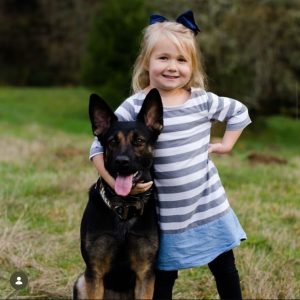
That means the dog must be safe with kids, safe around guests, stable around normal family movement, and controllable in daily life.
Your children should not have to live around an unstable dog.
Your wife should not have to manage a dog she cannot control.
Your guests should not be put at risk because the dog cannot distinguish normal visitors from real threats.
Your family should not become less safe because you bought a dog that looked impressive in training.
This is why Fortress K9 uses a hard standard:
If a dog is not safe around your children, it is not a protection dog.
A dog that can bite but cannot live safely in your home is not giving your family protection.
It is creating a new problem.
That is one of the biggest protection dog buying mistakes buyers need to avoid.
Capability Still Matters
Safety alone is not enough.
A calm dog that cannot respond under pressure is not a protection dog either.
A dog may be sweet with your children and still have no real ability to stop a determined threat.
A dog may bark at the window and still back away when someone comes through the door.
A dog may look protective in the yard and still fail when the situation becomes fast, loud, confusing, or physical.
A true real-world protection dog must be capable under pressure.
That means the dog can respond to a real threat, not just a familiar training pattern.
The dog must have the nerve, clarity, obedience, and training to move toward danger when the family needs time and space.
That is what separates a family pet with a bark from a trained home protection dog.
The standard is both.
Safe in the home.
Capable in the fight.
The Switch: Calm Until the Threat Is Real
A proper home protection dog should not act like every person is a threat.
That is not protection.
That is instability.
The dog should be calm during normal family life.
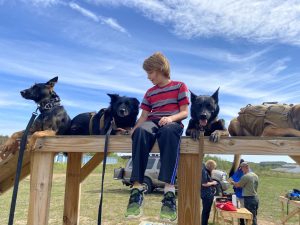
The dog should be stable around children, guests, pets, household movement, and public environments.
Then, when a real threat requires it, the dog should be able to turn on controlled aggression.
And when the threat is over, the dog should be able to turn off and return to stability.
That is The Switch.
Calm in the home.
Capable when it matters.
Controlled when the threat is over.
This is the balance most families actually want.
They do not want a dog that makes their house harder to live in.
They want a dog that helps them keep their family safe without creating fear inside the home.
That is why the right dog matters.
The wrong dog can make daily life more stressful.
The right dog can bring a level of confidence most families have never experienced.
What to Look for When Searching for Home Protection Dogs for Sale
If you are actively searching for home protection dogs for sale, do not evaluate the dog by one video or one dramatic demonstration.
Look for the full standard.
A serious home protection dog should show:
- Stable temperament
- Clear obedience
- Safety around children
- Control around guests
- Ability to settle in the home
- Confidence in real-world environments
- Protection ability under pressure
- Reliable release and recall
- Proper matching to the family
- Support after purchase
The seller should care about where the dog is going.
They should ask about your family, your home, your children, your pets, your lifestyle, your experience level, your security concerns, and your handling ability.
If someone is willing to sell the same dog to anyone with money, be careful.
Protection dogs are not commodities.
The wrong match can create risk.
The right match can change how your family lives, sleeps, travels, and responds to danger.
To compare Fortress K9 training levels, review Training Levels & Pricing.
Home Protection Dog vs Family Guard Dog
People often use terms like home protection dog, family guard dog, personal protection dog, and trained guard dog as if they all mean the same thing.
They do not always mean the same thing.
A family guard dog is often thought of as a dog that watches the property, barks at strangers, and creates deterrence.
A home protection dog should go beyond that.
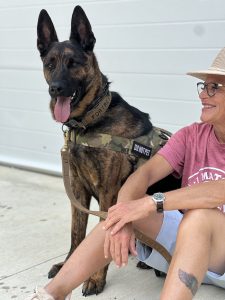
A real home protection dog is integrated into the family. It lives with the family. It understands household life. It is safe around normal people and capable when a real threat appears.
A personal protection dog may be more focused on one handler and may travel more often with that person.
An executive protection dog may require a higher level of environmental stability, public behavior, travel readiness, and advanced control.
The right choice depends on the buyer’s actual situation.
A family with small children may need a different dog than a single adult who travels alone.
A rural property owner may need a different solution than an executive in public environments.
A family looking for home security may not need the same level as someone facing higher personal exposure.
That is why the consultation process matters.
The goal is not to sell the most intense dog.
The goal is to place the right dog.
Why Fortress K9 Does Not Sell Volume Dogs
Fortress K9 is not built as a volume dog business.
That matters.
A real protection dog requires selection, training, testing, control, family matching, and integration support.
Not every dog qualifies.
Not every buyer is ready.
Not every household needs the same level.
When the product is supposed to live with your family and respond during a real threat, shortcuts are unacceptable.
The question is not just whether the dog can be sold.
The question is whether the dog should be placed in that home.
That is why Fortress K9 focuses on premium trained family protection dogs for serious buyers who want clarity before they make a major decision.
If you already know your family needs real protection, schedule a consultation.
If you are still deciding, start with the free Protection Dog Decision Guide.
Do You Need a Home Protection Dog?
Not every family needs a protection dog.
But some families should seriously consider one.
You may be a fit if:
- You are concerned your current security is not enough.
- You travel and worry about your family at home.
- Your spouse feels vulnerable when alone.
- You live on rural property or in an isolated area.
- You want an active layer of protection inside the home.
- You understand that a protection dog is a serious responsibility.
- You want a dog that is both safe with the family and capable under pressure.
- You are financially prepared for a premium trained dog.
You may not be ready if:
- You want the cheapest possible option.
- You only want a dog that looks intimidating.
- You are unwilling to maintain structure.
- You do not want to participate in handler training.
- You want a dog to solve every security issue without family responsibility.
- You cannot accept that the right dog must be matched carefully.
A protection dog is not a pet purchase.
It is a serious security decision.
That is why education comes first.
A Home Protection Dog Should Add Certainty, Not Chaos
The right dog should make your family more confident.
Not more anxious.
The right dog should help your wife sleep better when you are away.
Not make her nervous about managing the dog.
The right dog should be stable around your children.
Not something you have to keep separated from normal family life.
The right dog should give your family more time during a real threat.
Not create confusion when control matters most.
This is the Fortress K9 standard.
Safe in the home.
Capable in the fight.
A dog that cannot respond to a real threat does not give your family protection.
A dog that cannot live safely in your home does not give your family peace.
You need both.
Ready to Learn More?
If you are looking for home protection dogs for sale and want a serious answer, the next step is simple.
Schedule a consultation with Fortress K9 if you are ready to discuss your family, home, security concerns, timeline, and protection needs.
If you are still deciding whether a protection dog is right for your family, start with the free Protection Dog Decision Guide.
If you want to understand the difference between training levels, review Training Levels & Pricing.
FAQ
Are home protection dogs safe with kids?
They can be, but not every dog sold as a protection dog belongs in a home with children. A true family protection dog must be stable, obedient, controlled, and safe with kids during normal family life. At Fortress K9, the standard is clear: if a dog is not safe around your children, it is not a protection dog.
Are home protection dogs safe with pets?
Some protection dogs can live safely with pets, but it depends on the dog, the other animals, and the home. This should be discussed during the consultation so the right dog is matched to the right household.
What is the difference between a home protection dog and an alarm system?
An alarm alerts you that something is wrong. A home protection dog can alert, move toward the threat, disrupt the attacker, and buy time for your family to react. A protection dog should not replace alarms, cameras, locks, or firearms, but it can add an active layer those tools do not provide.
What is the difference between a home protection dog and a family guard dog?
A family guard dog is often thought of as a deterrent or property-focused dog. A home protection dog should be integrated into the family, safe in the home, obedient around normal life, and capable of responding to a real threat under control.
Do I need experience to own a home protection dog?
Experience helps, but the right dog and the right training process matter more. A first-time working-dog owner may still be a fit if the dog is properly matched, the family receives integration training, and the household is willing to maintain structure.
How do I know which protection dog is right for my family?
The right dog depends on your family, children, pets, home environment, lifestyle, handling ability, timeline, and security concerns. That is why Fortress K9 starts with a consultation before recommending a specific dog.