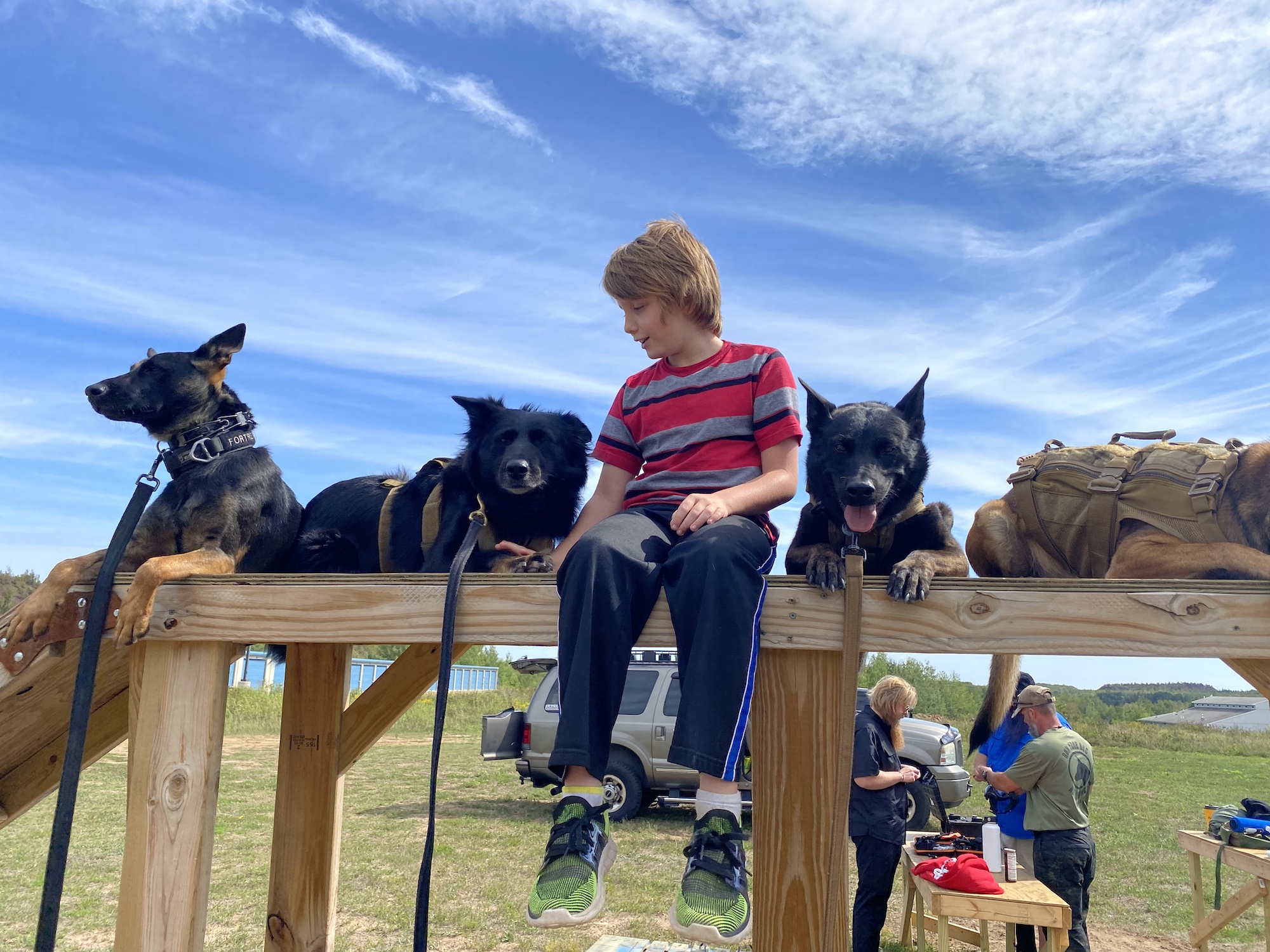
Buying a protection dog is not like buying a normal dog.
It is not like buying a security camera.
It is not like buying a firearm.
It is a serious decision that affects your family, your home, your liability, your daily life, and your ability to respond if a real threat ever comes through the door.
The right dog can give your family a living layer of protection.
The wrong dog can create risk, confusion, and false confidence.
That is why the biggest mistake most buyers make is starting with the wrong question.
They ask:
“What dogs do you have available?”
They should ask:
“What dog is actually right for my family, my home, and my security needs?”
Those are not the same question.
If you are still deciding whether a protection dog is right for your family, start with the free Protection Dog Decision Guide before you make a costly mistake.
If you already know your family needs real protection, then scheduling a consultation is the right next step.
Mistake 1: Buying the Dog Before Understanding the Mission
A protection dog must have a mission.
Not a vague idea.
Not “I want a scary dog.”
Not “I want the toughest dog you have.”
The mission matters because the mission determines the dog.
A dog for a single adult who travels constantly may not be the same dog as a dog for a family with small children.
A dog for a rural property may not be the same dog as a dog for an executive who needs public stability.
A dog for a high-threat household may not be the same dog as a dog for a family that mainly wants deterrence, warning, and peace of mind.
Before you buy a protection dog, you need to define the actual problem.
Are you trying to protect your wife and children while you travel?
Are you concerned about home invasion?
Do you live on rural property with longer response times?
Do you need a dog that can travel?
Do you have children, guests, cats, small dogs, livestock, or frequent contractors?
Do you want a visible deterrent, active protection, or a higher level of capability?
Do you understand what level of dog your family can actually handle?
If you do not know the mission, you cannot choose the right dog.
At Fortress K9, the dog is selected around the family, the home environment, the security concern, the handler, and the level of protection needed.
That is how the process should work.
The dog should fit the mission.
The buyer should not force the mission onto the wrong dog.
Mistake 2: Thinking “Trained” Means the Same Thing Everywhere
One of the most dangerous assumptions in this industry is that the word “trained” has a fixed meaning.
It does not.
A company may call a dog trained because it bites a sleeve.
Another may call a dog trained because it has obedience.
Another may call a dog trained because it came from Europe with a title.
Another may call a dog trained because it looks impressive in a video.
None of that automatically means the dog is ready to protect your family.
A trained protection dog should be safe, stable, obedient, controllable, and capable under real pressure.
It should be able to live in the home.
It should be able to function around the family.
It should be able to respond when the threat is real.
It should be able to turn off when the threat is over.
If a company cannot explain what “trained” means in practical terms, that is a problem.
Ask what the dog is trained to do.
Ask what the dog has been exposed to.
Ask how the dog behaves in the house.
Ask how the dog handles children.
Ask how the dog responds around guests.
Ask how the dog works under pressure.
Ask what happens after the dog comes home.
A label is not enough.
A title is not enough.
A bite video is not enough.
Mistake 3: Buying the Bite Instead of Buying the Standard
Many buyers get distracted by bite work.
They want to see the dog hit hard.
They want to see power.
They want to see intensity.
That is understandable.
A protection dog must be capable. A weak dog does not solve a serious security problem.
But a dog that bites is not automatically a dog that protects.
Biting is only part of the picture.
The real question is whether the dog can protect correctly.
Can the dog recognize a real threat?
Can the dog stay connected to the handler?
Can the dog be controlled?
Can the dog be called off?
Can the dog function in a home, not just on a training field?
Can the dog deal with pressure, movement, confusion, and resistance?
Can the dog remain safe around the family after the fight is over?
That is the standard.
Years ago, I wrote an article for ITS Tactical called Questions You Should Ask Before Buying a Protection Dog. The point still matters: buyers need to ask serious questions before making a serious commitment.
Do not buy the bite.
Buy the standard.
Mistake 4: Ignoring Safety Around Children
This is the non-negotiable issue for families.
If a dog is not safe around your children, it is not a protection dog.
It may be powerful.
It may be expensive.
It may be imported.
It may have impressive videos.
It may bite hard.
But if the dog cannot safely live around your children, that dog does not belong in your home as a family protection dog.
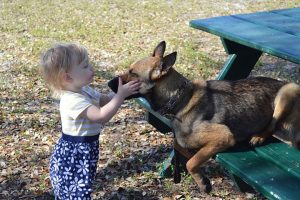
Children move fast.
They yell.
They run.
They fall.
They drop things.
They touch dogs in ways adults do not.
They create unpredictable household movement.
A true family protection dog must be selected and trained for that reality.
That does not mean children get to treat the dog however they want.
Children need rules.
Parents need structure.
The dog needs proper handling.
But the dog must have the temperament and training to live safely in a real family environment.
Safety comes before power.
Capability still matters.
But if the dog cannot be safe in the home, the dog is not solving the problem.
It is becoming the problem.
Mistake 5: Ignoring Guests, Pets, and Normal Life
A protection dog does not live in a vacuum.
It lives in your home.
That means the dog may encounter:
Children.
Guests.
Delivery drivers.
Contractors.
Housekeepers.
Friends.
Extended family.
Cats.
Small dogs.
Other dogs.
Livestock.
Neighbors.
People in public.
If you only ask whether the dog can bite, you are not asking enough.
Ask whether the dog can live.
Can the dog settle in the house?
Can the dog move through normal family routines?
Can the dog be managed when guests arrive?
Can the dog be around other animals under control?
Can the dog ride in a vehicle?
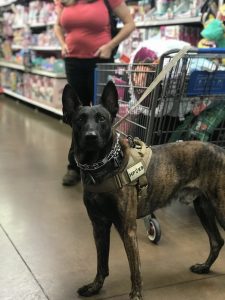
Can the dog go into public environments?
Can the dog remain calm when nothing is wrong?
A true protection dog needs what we call The Switch.
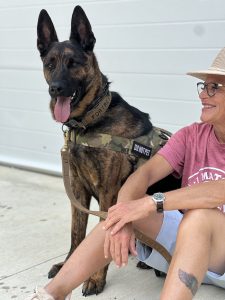
Calm and stable in normal life.
Capable of controlled aggression when a true threat requires it.
Then able to turn off and return to stability.
A dog that is always suspicious, always reactive, or always looking for conflict is not a higher-level protection dog.
It is a higher-level liability.
Mistake 6: Confusing Sport Training With Real-World Protection
Sport training and real-world family protection are not the same mission.
Sport training may produce impressive dogs.
It may show athleticism, obedience, power, grip, and intensity.
But sport is usually built around rules, equipment, predictable patterns, and controlled pictures.
Real violence does not follow those rules.
A real threat may happen in a hallway.
Beside a vehicle.
In a parking lot.
At your front door.
In the dark.
With children nearby.
With multiple people involved.
With someone using a weapon.
With someone who does not behave like a training helper.
That is why Fortress K9 does not treat sport performance as the same thing as family protection.
The dog must be trained for real life.
That includes home invasion scenarios, vehicle attack scenarios, surprise attack scenarios, weapons pressure, and the possibility of more than one attacker.
These are serious topics. They should not be exaggerated or turned into entertainment.
But they matter.
If someone breaks into your home or attacks your family, the situation will not look like a clean demonstration.
The dog must be prepared for the mission.
And after that training is done, the dog must still be safe in the home.
That is the balance.
Safe with the family.
Serious with the threat.
Controlled when the fight is over.
Mistake 7: Not Understanding Retargeting
Retargeting sounds technical, but the idea is simple.
Retargeting means the dog can change focus when the threat changes.
If the dog is engaged with one person and another person becomes the bigger threat, the dog may need to shift.
If the attacker starts using a weapon hand, the dog may need to respond to where the danger is coming from.
If the handler is suddenly in danger, the dog may need to come back to the handler instead of staying locked onto the first person.
That matters because real threats are dynamic.
They move.
They fight.
They change.
They do not always present the perfect target.
A dog trained only to bite and hold one target may keep doing exactly what it was trained to do.
But in real life, that may be the wrong answer.
This is one of the reasons protection dog buying mistakes can be so costly.
The dog may look good in one kind of demonstration but fail when the picture changes.
A true family protection dog is not trained merely to bite.
The dog is trained to protect.
That requires control, awareness, and judgment under pressure.
Mistake 8: Treating the Dog Like Security Equipment
A protection dog is not a piece of gear.
It is a living animal.
It needs structure, leadership, care, handling, and a clear relationship with the family.
A camera can be mounted on a wall and forgotten until the app sends an alert.
A dog cannot.
A firearm can be locked in a safe.
A dog cannot.
An alarm system can be armed and disarmed.
A dog has to live with you every day.
That means the buyer matters.
Your habits matter.
Your family structure matters.
Your willingness to learn matters.
Your ability to follow instructions matters.
Your commitment matters.
A protection dog may live 10, 12, or more years.
This is not a weekend purchase.
It is a long-term commitment.
That does not mean you need to be a professional trainer.
But it does mean you need to be willing to learn how to live with, handle, and maintain the dog correctly.
Mistake 9: Skipping Family Integration Training
A trained protection dog should not simply be handed over in a parking lot.
The family needs training too.
That is why Family Integration Training matters.
The dog may already know the work.
But you need to know how to handle the dog.
Your spouse needs to understand the dog.
Your children need rules.
The family needs to know how to manage guests.
You need to understand what to do in normal life.
You also need to understand what to do if a real threat occurs.
At Fortress K9, Family Integration Training teaches your family how to live with, handle, and maintain your new protection dog before the dog goes home with you.
That step is not optional in a serious program.
It is part of making the dog useful, safe, and stable in the real family environment.
A powerful dog without proper handling can become a problem.
A powerful dog with clear structure, proper integration, and a trained family becomes an asset.
Mistake 10: Shopping by Price Alone
Price matters.
A protection dog is a serious investment.
But price should not be the only filter.
The cheapest dog may become the most expensive mistake you ever make.
A poorly selected dog can create risk around children.
A poorly trained dog can fail under pressure.
An unstable dog can create liability.
A mismatched dog can make family life more stressful.
A dog without support can leave the family guessing after go-home.
On the other side, a higher price does not automatically prove the dog is better.
The question is not simply, “How much does it cost?”
The better question is:
What risk does this dog reduce?
What certainty does this dog create?
What training, matching, integration, and support are included?
Is this dog actually right for my family?
A serious buyer should understand the investment, but the decision should be based on fit, standard, capability, safety, and long-term support.
If you want to compare levels before moving forward, review Training Levels & Pricing.
Mistake 11: Assuming the Most Intense Dog Is the Best Dog
Some buyers think the best protection dog is the most intense dog.
That is not always true.
Intensity without stability is not the goal.
Aggression without control is not the goal.
Suspicion toward everyone is not the goal.
The right dog must fit the family.
For some families, the right dog may need very high capability.
For others, the right dog may need strong deterrence, excellent obedience, family stability, and enough protection capability for the actual threat profile.
A serious dog should be capable.
But the dog should also be livable.
It should not turn your home into a kennel, your life into a constant management problem, or your children into a safety concern.
The goal is not chaos.
The goal is confidence.
Mistake 12: Failing to Ask What Happens After the Dog Comes Home
The sale is not the end of the decision.
It is the beginning of life with the dog.
Before buying, ask:
What support is available after go-home?
What happens if I have questions?
What happens if the dog needs adjustment?
What handling rules should my family follow?
How should we manage guests?
How should children interact with the dog?
What should we practice?
What should we avoid?
How do we maintain the dog’s obedience?
What does the first month look like?
What does the first year look like?
A serious protection dog company should care about what happens after the dog leaves.
That is where the purchase becomes real.
The Buyer’s Checklist
Before buying a protection dog, ask these questions.
Is the dog safe around children?
Is the dog stable in the home?
Can the dog be controlled around guests?
Can the dog be managed around pets?
Can the dog work in real environments?
Can the dog handle pressure?
Can the dog be called off?
Can the dog turn off after activation?
Has the dog been trained for more than clean bite work?
Has the dog been exposed to home, vehicle, and surprise scenarios?
Does the dog understand the larger mission, or only one routine?
How is the dog matched to the family?
What training does the family receive?
What support exists after go-home?
What level of protection does the family actually need?
If those questions are not answered clearly, slow down.
A serious decision deserves serious clarity.
When Buying a Protection Dog Makes Sense
A protection dog may be the right decision if:
You want active protection, not just passive alerts.
You are concerned cameras and alarms may not be enough.
You want a dog that can live safely in your home.
You need a dog that is stable around children and guests.
You understand the responsibility of owning a serious dog.
You are willing to complete proper integration training.
You want a dog matched to your family, not just a dog that happens to be available.
You want confidence without turning your home into a prison.
A protection dog is not right for everyone.
But for the right family, the right dog can provide something cameras, locks, alarms, and other tools cannot provide:
A living, thinking layer of protection inside the family environment.
The Fortress K9 Standard
Fortress K9 does not sell protection dogs as status symbols.
We do not believe a protection dog should be judged by a bite video alone.
We do not believe a family should be left to figure out a serious dog on its own.
A Fortress K9 Family Protection Dog must be safe in the home and capable when it matters.
That means the dog must be stable around children, guests, pets, and normal household life.
It also means the dog must be capable under real pressure when the threat is real.
Both sides matter.
If you are ready to purchase a trained Fortress K9 Protection Dog, then scheduling a consultation is the right decision.
If you are still deciding whether a protection dog is right for your family, start with the free Protection Dog Decision Guide.
If you want to understand real protection dogs before moving forward, read Beyond the Bite.
If you want to compare the level of training and investment, review Training Levels & Pricing.
FAQ
What is the biggest mistake people make when buying a protection dog?
The biggest mistake is buying the dog before understanding the mission. A protection dog must fit the family, home environment, handler, threat profile, and level of protection needed. A dog that is wrong for the family can create more risk than certainty.
Are all trained protection dogs the same?
No. “Trained” does not mean the same thing from one company to another. Some dogs are trained for sport routines, some for patrol work, some for basic bite work, and some for real family protection. Buyers need to understand what the dog was actually trained to do.
Is bite work enough to prove a dog can protect my family?
No. Bite work can show power and engagement, but it does not prove the dog is safe in the home, controllable under pressure, stable around children, or capable in a real threat. A dog that bites is not automatically a dog that protects.
Are protection dogs safe with children?
A properly selected, trained, matched, and integrated family protection dog can be safe with children. But not every protection dog belongs in a home with children. If a dog is not safe around your children, it is not a protection dog.
What should I ask before buying a protection dog?
Ask whether the dog is safe with children, stable in the home, controllable around guests, trained for real-world pressure, capable of turning off, matched to your family, and supported after go-home. Also ask what training your family receives before taking the dog home.
Should I buy the most intense protection dog available?
Not necessarily. The best dog is not always the most intense dog. The right dog must fit the family, lifestyle, home environment, and threat profile. Intensity without stability can become liability.
Why does Family Integration Training matter?
Family Integration Training helps the family learn how to live with, handle, and maintain the dog before taking the dog home. It helps turn a trained dog into a functional family protection dog inside the buyer’s actual life.